Clean powder discharge

Why does powder keep falling after an auger filler stops?

Powder can continue to fall after an auger stops because gravity, air release or product remaining below the screw keeps material moving. The remedy depends on when the material escapes and how the powder behaves; changing the dose setting alone may not restore a clean cut-off.

Auger filling machinery illustrating the hopper and powder discharge area
Lancing powder filling machinery. Configuration depends on the application.
Practical selection guidance

Separate continued flow from delayed arrival

A tail of powder entering the pack is not automatically a drive fault. First establish whether the screw is still turning, stationary tooling is letting powder pass, or an already released dose is still travelling into the pack. Each situation needs a different investigation.

Observe from outside the guarding during an authorised trial. Record a sequence that includes a normal dose, a longer pause, hopper replenishment and restart. Do not reach into the outlet or defeat interlocks to see the mechanism. Inspection or adjustment inside the machine requires safe isolation and the manufacturer’s procedure.

Practical selection guidance

Use the symptom to choose the next check

Discharge observations to record before changing tooling
ObservationPossible mechanism to investigateEvidence to take to the supplier
Material continues throughout the pauseGravity flow through stationary tooling or inadequate outlet retentionProduct condition, outlet geometry and the amount collected during a defined pause
A short tail follows every dosePowder below the screw, product in flight or delayed releaseThe delay between screw stop, last powder arrival and pack movement
A burst follows hopper refillAeration or changed feed conditions rather than a simple set-point errorRefill timing, hopper level and fill sequence before and after replenishment
Powder reaches the seal or neck during transferDischarge timing, displaced air or pack motionFilled-pack photographs, transfer sequence and sealing or capping observations
Practical selection guidance

Compare retention and positive closure as separate design choices

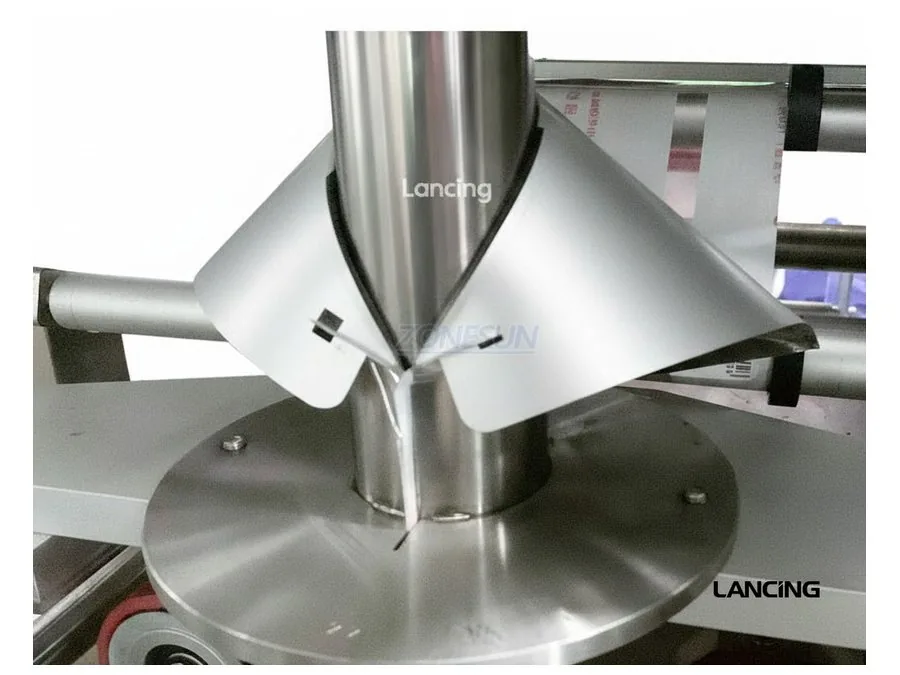
Supplier tooling can retain suitable powder using the relationship between the screw, outlet and product flow. Some designs use a spinner disc or a retaining washer or screen; other designs physically close the discharge. These are alternative engineering concepts, not accessories that can be assumed to fit every Lancing filler.

A passive device avoids an additional moving closure but must retain the actual powder without blocking discharge. A mechanical closure adds a controlled moving part, with corresponding timing, cleaning, wear and guarding requirements. Ask how the complete outlet can be inspected and cleared, especially where a screen could collect foreign material or damaged product.

Do not select a closure solely from an ingredient name. Two batches with different moisture, particle distribution or aeration may behave differently. Confirm the agreed option using the powder after its proposed loading method, not only a hand-poured sample.
Practical selection guidance

Define a cut-off acceptance sequence

  1. Identify the product batch, fill target, pack, screw and outlet configuration.
  2. Collect consecutive finished-pack weights at the intended line timing.
  3. Separately record material escaping between doses; do not silently add it to the next sample.
  4. Repeat after refill, during low-hopper running and after an agreed pause.
  5. Inspect necks, threads or seal areas before the pack is closed.
  6. Record rejects, cleanup interventions and restart behaviour alongside the weight results.

A clean-looking outlet is insufficient if the finished pack fails to close correctly. Agree both discharge and finished-pack acceptance criteria before ordering. No universal allowable dribble mass is assumed here.

Practical selection guidance

Questions to resolve before specifying the equipment

Will reducing auger speed stop leakage between fills?

Reducing auger speed may change discharge behaviour, but it does not provide a physical barrier to gravity flow while the screw is stationary. First distinguish leakage during the pause from powder that is still in flight after a correctly stopped dose. Tooling, outlet retention and pack timing should then be assessed together.

Can a dust extraction hood replace a powder cut-off?

A dust extraction hood is intended to control airborne material at a source; it is not a substitute for retaining the bulk dose. Excessive or poorly positioned extraction can also remove saleable powder or disturb filling. The discharge-control concept and the extraction design need separate acceptance checks before they are combined.

How can I check whether powder is falling during container indexing?

During a guarded test, compare the time of screw stop with the last powder arrival and the start of container movement. Collect finished packs in order and record any material outside the pack. A supplier-approved slow or observation mode may help, but no test should require bypassing safety functions.

What should I send with a powder dribbling enquiry?

Send the powder description, safe sample information, target weight, actual packs, outlet photographs taken safely, and an external video showing a complete fill-and-pause sequence. Include the refill method and current line timing. The most useful evidence distinguishes powder escaping between fills from residue on the pack after transfer.

Practical selection guidance

Technical sources and application limits

Prepared for Lancing’s powder-filling buyers. These sources explain general principles; they do not certify a particular Lancing configuration or replace an application-specific assessment.