Powder behaviour
Very fine, aerated or electrostatically charged powders can remain suspended after the dose has ended.
Powder can be kept out of a pouch seal area by controlling the powder trajectory, displaced air, fill height, cut-off and the time allowed before sealing. The correct solution may combine nozzle positioning, staged filling, dust extraction, pouch support and settling time, and it must be proven with the actual powder, pouch and sealing process.
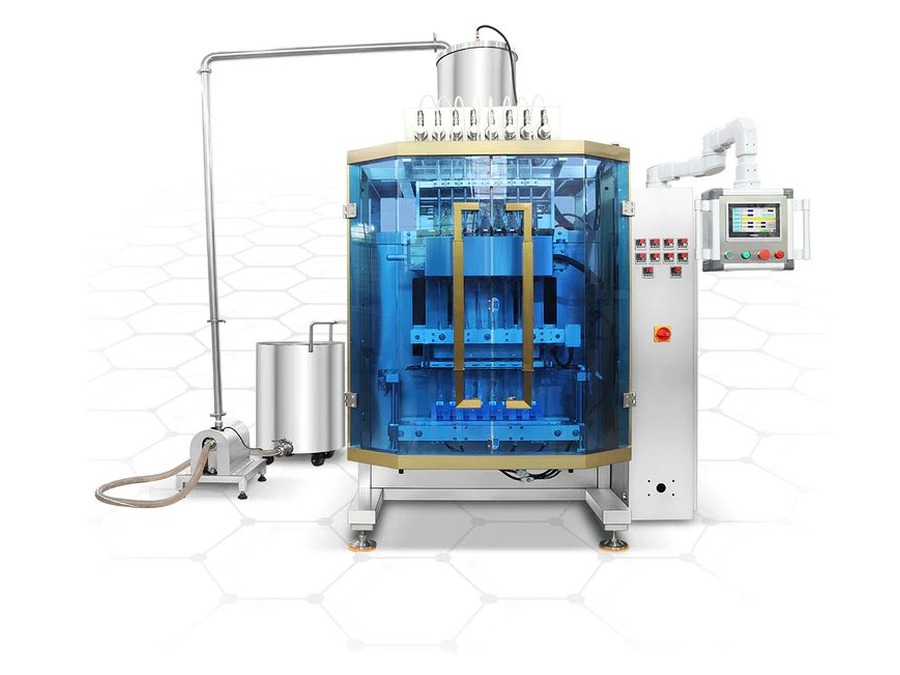
Powder on the seal faces can reduce seal strength, create channels or leave an untidy finished pack. The source may be dust released during free fall, air displaced from the pouch, product bouncing from the pack, a late tail from the nozzle, static effects or movement while the pouch transfers to the sealing station.
The remedy should target the actual route by which powder reaches the seal. Simply increasing extraction or slowing the whole machine may reduce visible dust without correcting the fundamental timing, geometry or fill-height problem.
Seal quality must be assessed using the chosen film or premade pouch, the intended sealing parameters and the organisation's approved inspection method. A visually clean seal is useful evidence, but it is not a substitute for the required seal-integrity and pack-quality checks.
Use the sequence as a project checklist, then confirm the final arrangement with representative product and packs.
| Stage | What to check |
|---|---|
| Observe the dose | Use safe observation or recorded trial footage to identify whether dust occurs at dose start, during free fall, at cut-off or during transfer. |
| Control the drop | Review nozzle diameter, position, insertion depth and the distance to the product surface without risking contact or pouch damage. |
| Manage displaced air | Give air a controlled escape path and avoid a filling arrangement that turns the pouch into a bellows carrying dust upwards. |
| Allow settling | Where the product remains airborne, provide an appropriate pause, vibration or controlled transfer before the seal area closes. |
| Capture local dust | Position extraction to remove airborne dust without drawing significant saleable product from the dose or destabilising the pouch. |
| Verify the seal | Inspect and test packs across normal starts, stops, refills and production variation, not only the cleanest trial cycle. |
Very fine, aerated or electrostatically charged powders can remain suspended after the dose has ended.
Pouch opening, gusset, fill height and seal width determine the available clean zone.
Cut-off, transfer acceleration and sealing delay affect whether airborne powder reaches the seal.
Insufficient capture leaves dust; excessive capture can remove product or distort a light pouch.
These answers describe the practical variables that should be checked before a machine or process is accepted.
Powder reaches the pouch seal area when airborne particles or product tails travel upward after dosing. Common causes include excessive free fall, displaced air, an overfilled pouch, a poorly timed cut-off, pouch movement and dust that remains suspended until the sealing jaws close.
A trial should identify the timing of contamination. Powder present immediately after filling suggests a dosing or air-management issue; contamination that appears during transfer may point to pouch support, acceleration or settling time.
Local extraction near the filling nozzle can be effective when it captures airborne dust at source without drawing the main dose away. The hood shape, distance and airflow must be matched to the powder and pouch opening. A generic high-airflow connection can increase product loss, disturb the dose or collapse a light pouch.
Dust extraction also needs an appropriate collection, cleaning and safety design. Where combustible dust may be present, the complete system requires a competent risk assessment rather than an isolated fan selection.
Slower filling does not always produce a cleaner seal. Reducing auger speed may lower the powder plume, but it can also lengthen exposure, change product aeration or leave the pouch waiting in an unstable position. The better adjustment may be a staged dose, improved cut-off, shorter drop or extra settling time.
Change one factor at a time and compare both seal cleanliness and fill consistency. The production target should reflect the fastest repeatable cycle that maintains the agreed pack quality, not the fastest isolated fill.
A pouch filling trial should check pouch opening, nozzle access, dust escape, fill weight, product height, settling, transfer stability, seal-zone cleanliness and finished seal quality. Use production-intent pouches and enough representative powder to reproduce refilling, stoppages and the expected cycle sequence.
Record which machine settings and pack materials were used. See the trial scale-up guide and the enquiry checklist when preparing samples.
Send representative powder and production-intent pouches, together with the required fill range and pack-quality checks, so Lancing can review the complete filling and sealing sequence.