Inspect the pack rim
Check whether powder remains on threads, lips or seal zones.
Specify the filling point around powder flow, pack opening, fill height, dust release and downstream closing so the dosing path supports both weight control and a clean finished pack.
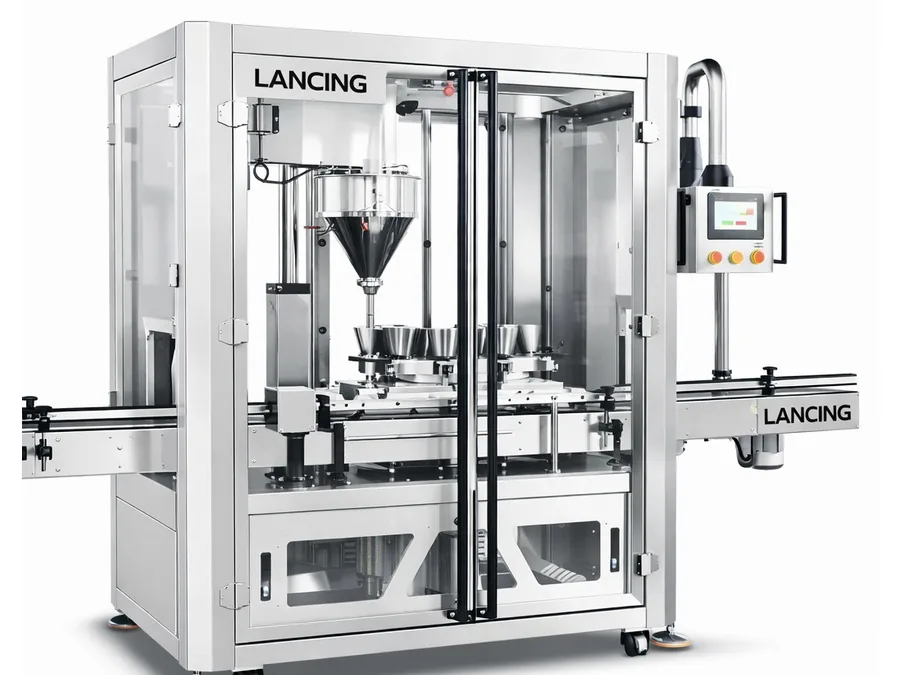
The powder filling nozzle influences how product enters the pack, how much dust escapes, whether powder lands on rims or seal areas and how cleanly the dose stops. Nozzle and shroud choices should be matched to product behaviour and container geometry.
A dust shroud, extraction point or fill-height adjustment can help in some applications, but it must be set so it captures dust without disrupting the powder stream or pulling product out of the pack.
Small differences at the nozzle can change pack cleanliness and repeatability.
| Specification area | What to check | Why it matters |
|---|---|---|
| Nozzle diameter | Opening size and product flow | Affects access, dust and bridging at the discharge |
| Nozzle height | Distance from product surface or pack base | Influences dust, aeration and rim cleanliness |
| Dust shroud | Local capture around the fill point | Helps housekeeping when designed around the real product |
| Cut-off behaviour | Powder continuing to fall after dosing | Can affect weights, rims and seal areas |
Check whether powder remains on threads, lips or seal zones.
Dust capture should not disturb the fill stream.
A pack that looks clean after filling may change once capped or sealed.
These answers are written to help production, engineering and procurement teams prepare a realistic enquiry.
A powder filling nozzle guides the dosed product into the pack and helps control where the powder lands. Its size, shape and position affect dust, cleanliness and repeatability.
A dust shroud can be useful when powder escapes around the filling point, but the design depends on the product and pack. Extraction must not remove saleable product or destabilise the fill.
Nozzle height can affect fill accuracy indirectly by changing dust, aeration, bridging or product bounce. It should be checked during setup and product trials.
Pack drawings, opening size, target weight, powder flow behaviour, dust level, downstream closure and acceptance criteria help select a suitable nozzle arrangement.
Include product samples, fill target, pack format, target output and any cleaning, dust-control, sealing, coding or integration requirements.