Existing-line integration

Can an auger filler be retrofitted to an existing packaging line?

An auger filler can be considered for an existing line when its mounting, discharge position, product supply, control signals and safety functions can be integrated with the host machine. Physical space alone does not establish compatibility. Agree interface ownership, the required sequence and acceptance tests before selecting the filler.

Powder filling and product-feed equipment for packaging line integration
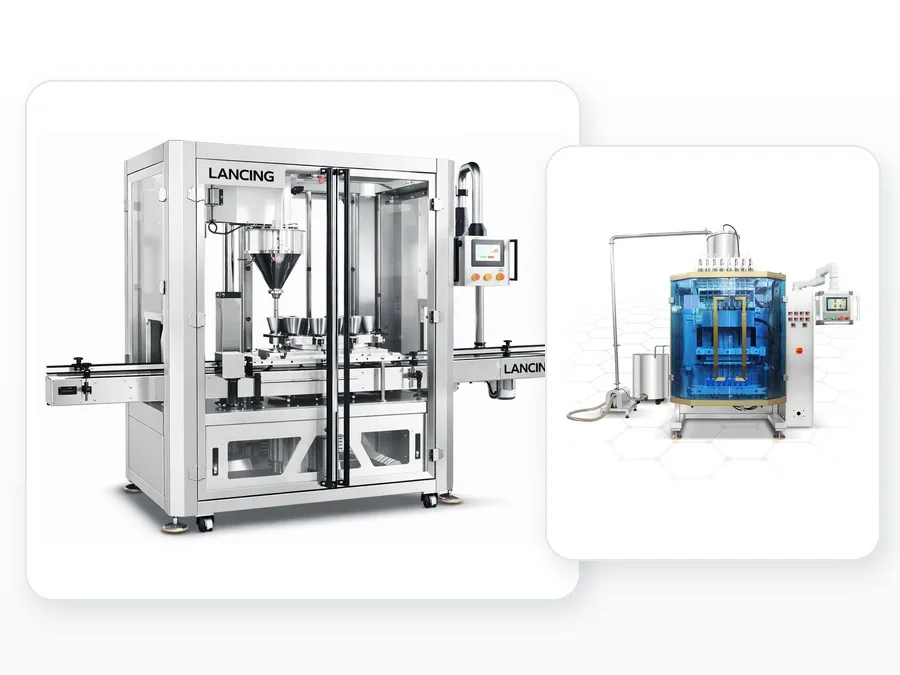
Lancing powder filling machinery. Configuration depends on the application.
Practical selection guidance

Start with the existing machine, not only the new filler

Provide the host machine’s identification, drawings and available operating documentation. For a rigid-container line, show conveyor height, the clear pack opening, indexing and downstream closure. For a bagger, show the forming tube or pouch opening, filling window, support structure and sealing sequence. Photograph access routes as well as the intended mounting location.

A filler that fits above the pack can still leave no safe route to remove the screw, open the hopper, change film or clean a retained-powder area. Review the envelope for operation, maintenance and changeover separately. Structural suitability must be checked for the selected equipment rather than inferred from a photograph.
Practical selection guidance

Agree an interface schedule

Information to allocate between the filler supplier and host-line integrator
InterfaceInformation to agreeAcceptance evidence
MechanicalMounting, loading, height adjustment, outlet alignment and accessApproved layout and a witnessed pack-format change
Product feedRefill request, hopper level, depletion and product transferRepeatable running before, during and after refill
Production controlReady, fill request, filling, complete, fault and reset statesA recorded state sequence, including lost or repeated signals
SafetyRisk assessment, guarding, stopping, isolation and restart responsibilitiesCompetent validation of the completed assembly
QualityPartial fills, rejects, checkweigher feedback and record ownershipTraceable handling of deliberately challenged test packs
Practical selection guidance

Define the handover sequence without assuming a wiring standard

A proposed production sequence might be: pack ready, filler ready, a single fill request, controlled dosing, fill complete, then permission to transfer or seal. This is a functional description for the integrators to agree, not a universal electrical schematic. Signal voltages, timing, communications and safety architecture must come from the actual equipment documentation.

Specify what happens if a pack is missing, product runs low, the bagger stops during a dose or a completion signal never arrives. A restart should not silently repeat a completed dose or release a partly filled pack as acceptable. Define how the affected pack is identified and cleared before automatic running resumes.

Practical selection guidance

Plan the change as a whole-machine assessment

Adding or substituting equipment can affect the operation and safety of an existing assembly. HSE guidance explains that substantial changes may require assessment of the modified assembly. Do not assume the original machine marking or a declaration for the new filler alone settles the duties for the completed line.

Assign responsibility for the assessment, necessary documentation and commissioning before purchase. The retrofit review should include access to moving parts, new interfaces, isolation, cleaning, dust and foreseeable misuse. A competent application-specific assessment is required; this guide is not an approval of a proposed modification.

Practical selection guidance

Test the difficult states before normal production

  1. Prove the intended product, pack and dose with the agreed filler tooling.
  2. Check mounting, access and changeover with the largest and smallest agreed formats.
  3. Run the complete sequence at the required production cadence.
  4. Challenge missing packs, loss of product, host-machine stops and recovery.
  5. Inspect seals or closures and reconcile accepted packs with rejects.
  6. Record handover documents, training and the final responsibilities for maintenance.

Use the existing output planning calculator to express the requirement in good packs per shift. The result is a requirement for the trial, not proof that the chosen line can achieve it.

Practical selection guidance

Questions to resolve before specifying the equipment

Can the existing VFFS controller directly start a new auger filler?

The host controller may be able to request a fill, but the interface must be agreed with both equipment suppliers. A start signal is only one part of the exchange. Ready, complete, fault, stop and reset behaviour must also be defined so a missing or repeated command does not create an undetected partial or double fill.

Does an auger retrofit always require a new conveyor?

An auger retrofit does not automatically require a new conveyor. The existing conveyor must still support stable pack presentation, suitable indexing, the required cleanable layout and the finished line rate. Its condition, format range and control interfaces need checking before re-use is included in the project scope.

Who should approve the safety of a modified powder filling line?

Responsibility for the completed modified line should be explicitly assigned to a competent party before work starts. The assessment needs to consider how the modification affects the whole assembly, not simply whether individual machines have documentation. The relevant duties depend on the extent and nature of the changes.

What information makes a retrofit quotation useful?

A useful retrofit enquiry includes the host machine identity, layout and interface documentation, actual packs, powder information, target dose range and required good output. Add changeover requirements, available services, constraints on downtime and the proposed acceptance sequence. Identify who will own installation, control integration and final validation.

Practical selection guidance

Technical sources and application limits

Prepared for Lancing’s powder-filling buyers. These sources explain general principles; they do not certify a particular Lancing configuration or replace an application-specific assessment.