How to estimate output from a powder filling machine.
Output is limited by the slowest practical stage in the line, not just the filler speed on a specification sheet.
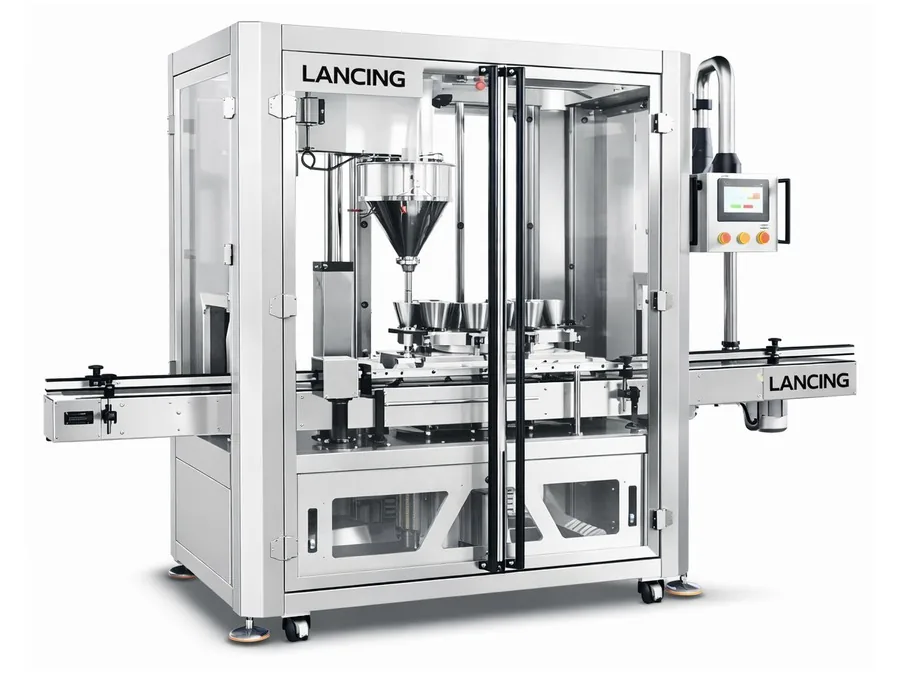
Start with the product, pack and required output.
The auger may be capable of high cycle speeds, but product flow, fill weight, container handling, settling time and downstream operations can reduce real production output. A realistic target should include complete packs per minute.
For larger fills or dusty powders, the filling cycle may need to be slower to protect accuracy and pack quality. For small fills, container handling and changeover may be the bigger limitation.
Details that help narrow the specification
- Target packs per minute or hour
- Fill weight and product density
- Manual, semi-automatic or automatic handling
- Settling, capping, sealing and labelling time
- Number of shifts and changeovers
Points to confirm before choosing equipment.
These checks help compare semi-automatic, automatic and line-integrated options against the way the product will actually be packed.
Measure output as finished packs per minute, including filling, closing and inspection.
Consider additional heads only when dosing limits output and product feed and pack handling can keep up.
Review settling, capping, sealing, labelling and inspection against the finished-pack requirement.
Include container handling, refills, shifts and changeovers in the realistic output estimate.
Common questions from machinery buyers.
Why is output lower than the filler cycle rate?
Because the line also includes container loading, settling, closing, inspection and changeover.
Can more filling heads increase output?
Potentially, if the product feed and pack handling can keep up.
What output figure should I ask for?
Ask for finished packs per minute or hour under your expected production conditions.
Send the product and pack details.
We can help compare the auger filler, powder feed and line options that fit your production requirement.
Related powder filling topics
Calculate the required powder filling rate
Convert required saleable packs per shift into the gross filling rate the line needs while it is running. The calculation separates planned breaks and changeovers from further running-time losses and rejects. Enter allowances based on your own evidence; do not enter a catalogue maximum as an assumed sustained rate.
Enter your values, then calculate.
Calculations stay in this browser. Inputs are not sent, saved, tracked or added to an enquiry. Results are planning aids, not a machine specification or a legal acceptance decision.
Keep the time and reject denominators separate
Planned production minutes = shift hours × 60 − breaks − changeovers. Assumed running minutes = planned production minutes × running-time percentage ÷ 100. Required gross packs per minute = required good packs ÷ [running minutes × (1 − reject percentage ÷ 100)]. Product demand in kg/hour = gross packs per minute × grams per pack × 60 ÷ 1,000.
Illustrative planning example: 6,000 good packs over an eight-hour shift, with 30 minutes of breaks, 30 minutes of changeovers, 80% remaining running time and 2% rejects, requires about 18.22 gross fills per running minute. It is not a machine speed claim. Avoid counting the same stoppage in both planned time and the running-time allowance.
What the required rate leaves out
The result does not prove product flow, weigh settling, operator capacity, sealing dwell, refill capability or downstream closure speed. The powder-demand result assumes the stated target mass and excludes additional product giveaway and unrecovered spills. Confirm the complete line at the calculated requirement using real packs and the intended staffing.
Use the result with the line capacity study or the existing-line retrofit checklist.
Discuss the product, pack and acceptance requirements • Prepare your enquiry details