Only adjusting the setpoint
Lowering the target without reducing variation increases underfill risk.
Review the machine, product and checking method together so giveaway is reduced without increasing underfill risk or creating unstable production.
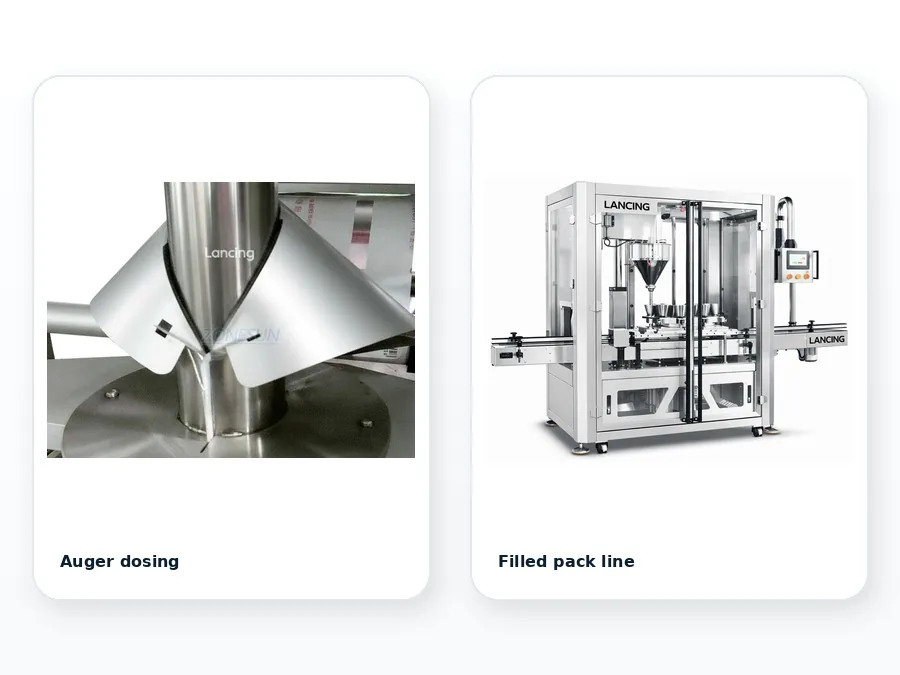
Product giveaway should be reduced by lowering filling variation first, not by setting a target dangerously close to the minimum acceptable weight. For auger filling, the main levers are correct tooling, consistent product feed, stable hopper level, controlled settings and a weighing plan that detects drift.
If bulk density changes during the run, open-loop volumetric dosing may need weigh feedback or checkweighing. The right control method depends on product value, legal weight obligations and the site’s accepted inspection procedure.
Each lever should be tested against both accuracy and practical output.
| Question | What to confirm | Why it affects the filler |
|---|---|---|
| Tooling selection | Match auger size, tube and nozzle to the target range. | Poorly matched tooling can increase variation or leave poor cut-off. |
| Hopper consistency | Control product level, agitation and feed condition. | Changing head pressure or aeration can move weights. |
| Weighing frequency | Set a realistic sample or in-line check method. | Drift must be detected before too much product is given away. |
| Feedback control | Compare open-loop dosing, scale feedback or checkweighing. | Variable powders may need weight information to correct settings. |
Lowering the target without reducing variation increases underfill risk.
The hardest production batch may drive the real tolerance needed.
Settling, vibration and handling after filling can change measured or apparent fill quality.
These answers help decide whether an auger-based route is worth testing for the product and pack.
Giveaway occurs because the filler must avoid underfills while real product and process variation still exist. Powder density, flow, hopper level, tooling and checking method all influence how much safety margin is needed.
Weigh feedback can help reduce giveaway when density variation or drift makes open-loop volumetric filling too variable. It is most useful when the weighing method is stable and the feedback rules are matched to the production process.
A checkweigher may be needed when final pack weight must be verified continuously, when giveaway is costly or when regulatory or customer requirements demand in-line checks. Smaller or lower-volume operations may use defined sample weighing instead.
The sample size should be large enough to show normal variation and drift over time. A few perfect trial fills are not enough; weigh a run that reflects loading, filling, stopping, restarting and normal operator handling.
Include product samples, fill target, pack format, target output and any cleaning, dust-control, sealing, coding or integration requirements.