Net weight and gross weight control in powder filling.
Weight control depends on how the product and container are measured during or after filling.
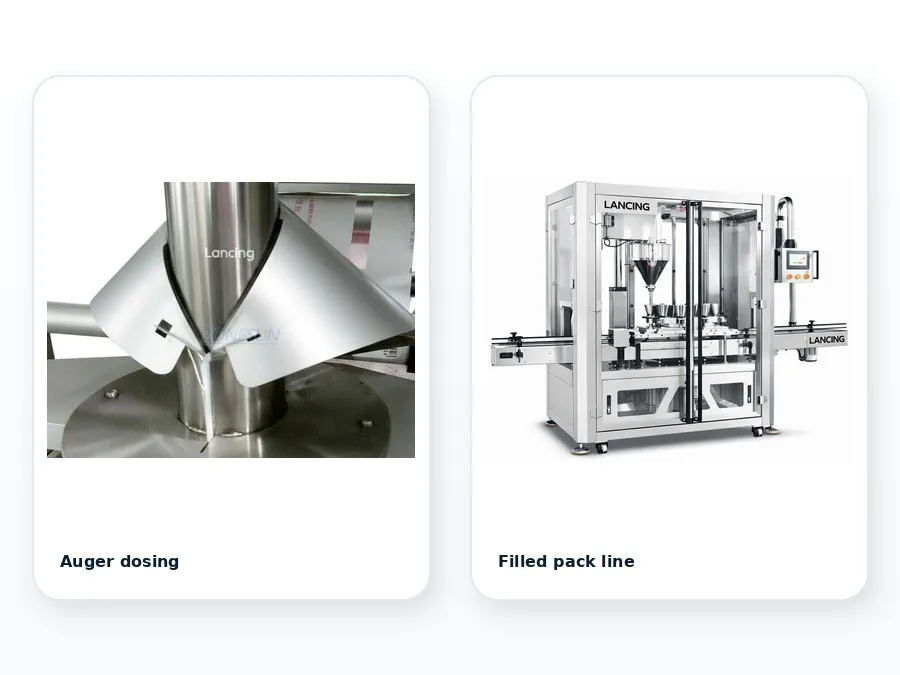
Start with the product, pack and required output.
Gross weight includes the product and the pack components present at the weighing point; net weight excludes the applicable tare. Product quantity may be established in a supported pack or a separate weighing vessel, so confirm the actual scale location and control sequence. Downstream checkweighing measures the finished pack and needs the agreed tare method to assess product quantity.
Tare weight variation, fill speed, product flow and reject strategy all affect the best approach. For high-value or regulated products, the weighing plan should be discussed early.
Details that help narrow the specification
- Container tare variation
- Product value and tolerance
- Speed requirement
- Checkweighing and reject rules
- Data or traceability needs
Points to confirm before choosing equipment.
These checks help compare semi-automatic, automatic and line-integrated options against the way the product will actually be packed.
Confirm which container, closure and insert components are included at the weighing point. A finished-pack gross weight needs appropriate tare accounting to establish product quantity.
Ask how product mass is established: in the pack after tare, in a separate weighing vessel or by another defined arrangement. Do not infer the control method from the word net alone.
Measure representative empty-pack variation and define whether individual or agreed tare values will be used. Include any components present when the weighing step occurs.
State whether the check is for product quantity, missing components or both, and agree the limits and reject handling for each purpose.
Common questions from machinery buyers.
What is tare variation?
It is the variation in empty container weight, which can affect finished-pack weight checks.
Do all powder lines need checkweighers?
No, but they are useful where verification or reject control is required.
Which method is best?
It depends on product, pack and tolerance requirements.
Send the product and pack details.
We can help compare the auger filler, powder feed and line options that fit your production requirement.
Related powder filling topics
Distinguish tare accounting from feeder control
Net and gross weight identify whether pack components are included in the reported mass. Gain-in-weight and loss-in-weight identify where changing mass is measured in the dosing system. These are separate questions and should both be resolved in a quotation.
Document the empty-pack and insert condition at tare, the point where powder is dosed and any later component additions. Keep the quantity inspection method separate from checks for a missing scoop or closure.
Continue with weight-control architecture or scoop insertion and pack assembly.