Factory acceptance testing for auger fillers and powder filling lines.
A well-planned FAT confirms the agreed machine functions, product handling assumptions and operator checks before equipment is released for delivery.
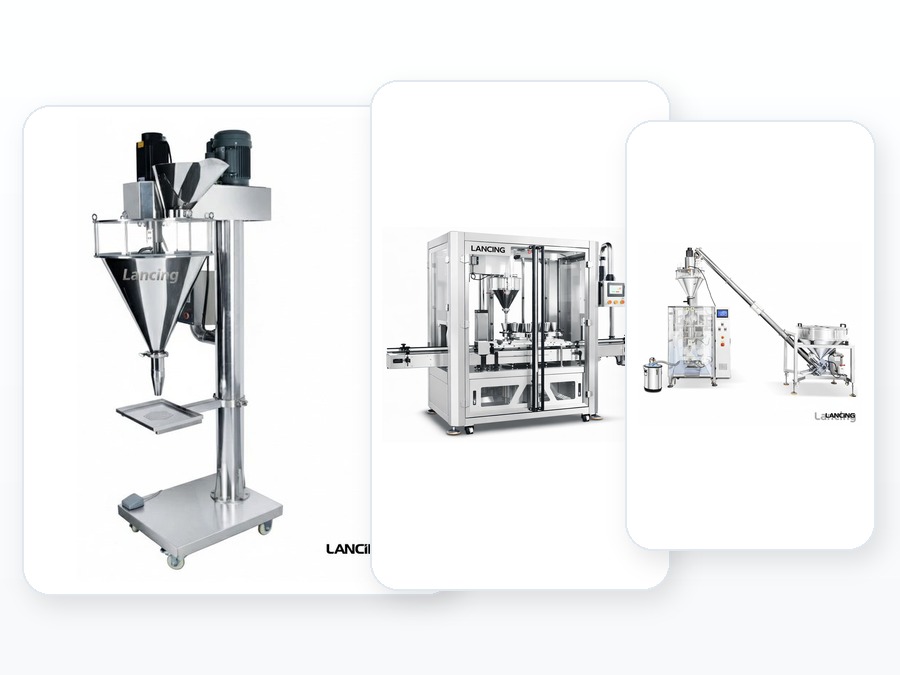
What a useful FAT should prove
The FAT should check the agreed scope rather than try to solve every unknown on the day. Product feed, container presentation, fill sequence, guarding, alarms and operator controls should be reviewed against the agreed specification.
Where product samples are available, test runs can help confirm flow, dust behaviour, cut-off, fill presentation and practical adjustments. Results should be treated as project evidence, not a universal guarantee for every batch of powder.
Integrated projects should include handover points between the feeder, filler, conveyor, capping, sealing, labelling, coding, inspection and accumulation stages.
Preparing for the FAT
Agree the products, fills and containers to be tested. Too many unplanned product changes during FAT can hide whether the machine has been built correctly.
Bring the real closure, label, film, pouch or container wherever possible so the review reflects production rather than an ideal sample.
Record actions clearly, with each action assigned to either machine adjustment, customer supply, product trial, training or site preparation.
What the FAT does not replace
The FAT does not replace site installation, operator training, production qualification or a site-specific safety assessment. It is one project checkpoint before dispatch.
Final performance still depends on the production powder, the operating method, utilities, environment, cleaning process and downstream equipment once the line is installed.
Key decisions to make before specification.
| FAT area | Typical checks | Evidence to bring |
|---|---|---|
| Mechanical operation | Indexing, auger rotation, hopper feed, nozzles, conveyors and guards | Machine layout drawing and pack samples |
| Control system | HMI screens, recipes, alarms, emergency stops and interlocks | Approved operating sequence |
| Filling trial | Fill presentation, dust behaviour, settling and sample weights | Powder samples, containers and target fill details |
| Line integration | Capping, sealing, labelling, coding, checkweighing and rejects | Closures, labels, film, code layout and reject criteria |
Information to gather before you enquire.
This checklist helps Lancing review the project quickly and avoids a machine recommendation based on incomplete product or pack information.
- Confirmed FAT agenda
- Product and pack samples
- Agreed acceptance checks
- Operators or project owners attending
- Action log template
- Transport and installation plan after release
Common questions about this topic.
Can FAT be done without product?
Basic operation can be reviewed, but powder behaviour and fill presentation are best checked with representative product and packs.
Is FAT the same as commissioning?
No. FAT is normally before delivery; commissioning checks the machine after installation in the actual production environment.
Can videos be used if I cannot attend?
Video review can help, but live attendance or structured remote review is better where detailed acceptance decisions are needed.
Need help specifying a powder filling machine?
Send your product, pack format, fill target and output requirement and Lancing can help compare suitable auger filler options.