Consider ergonomics
Manual placement may be acceptable for lower output but not for heavy repeated handling.
Use auger filling for pails and buckets when the product, fill target, container opening and handling method are checked together before the line is specified.
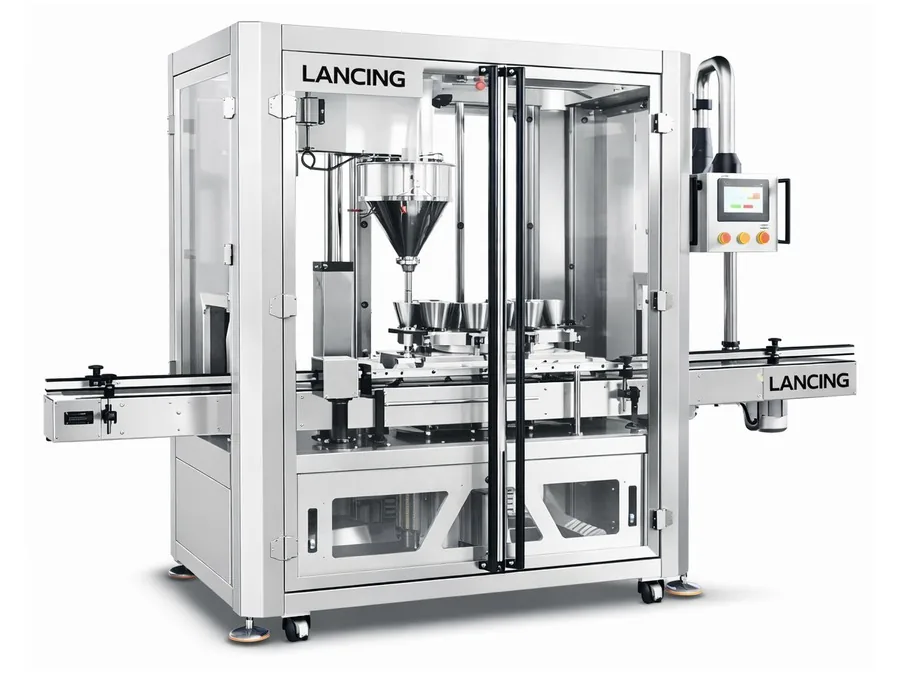
Pail and bucket powder filling usually involves larger fills, wider containers, heavier filled packs and more attention to container handling. Auger filling may be used, but hopper refill, fill height, dust containment, weighing checks and operator ergonomics become more important than on small jars.
The project should confirm whether containers are placed manually, indexed automatically or handled with conveyors before the filler is chosen.
A useful quote depends on more than the product name. These checks help choose a realistic machine route.
| Factor | What to check | Why it matters |
|---|---|---|
| Pack weight | Filled container weight and operator handling | Affects ergonomics, conveyors and lifting strategy |
| Opening size | Wide-mouth or restricted opening | Changes nozzle position and dust control |
| Weight control | Volumetric dosing, scale feedback or checkweighing | Important where giveaway and legal quantity matter |
| Lid closure | Press lid, screw lid or separate closing stage | Determines downstream equipment and floor layout |
Manual placement may be acceptable for lower output but not for heavy repeated handling.
Filled pails may need powered conveyors or accumulation.
Large fills can settle after dosing and change the apparent fill height.
These answers are written to help production, engineering and procurement teams prepare a realistic enquiry.
A standard auger filler may fill buckets if the fill range, nozzle height, container handling and powder behaviour are suitable. Larger packs often need a different stand, scale arrangement, conveyor or hopper-feed plan.
Net-weight checks or weigh feedback are often useful for pails because each fill may contain more product value. Volumetric auger dosing can still be appropriate, but the acceptable tolerance and batch-control method should be agreed.
Common bottlenecks include manual placement, lid handling, hopper refilling, product settling, dust cleaning and moving filled containers. These stages should be timed before estimating output.
Send pail dimensions, fill weight, powder sample, lid or closure type, required output, floor layout and whether filled packs will be moved manually or by conveyor.
Include product samples, fill target, pack format, target output and any cleaning, dust-control, sealing, coding or integration requirements.