Bag clamp and support
The way the bag is held can decide operator workload and spill control.
Review larger powder bag, sack and bucket filling projects where the right answer may be auger dosing, weigh filling or a combined handling route.
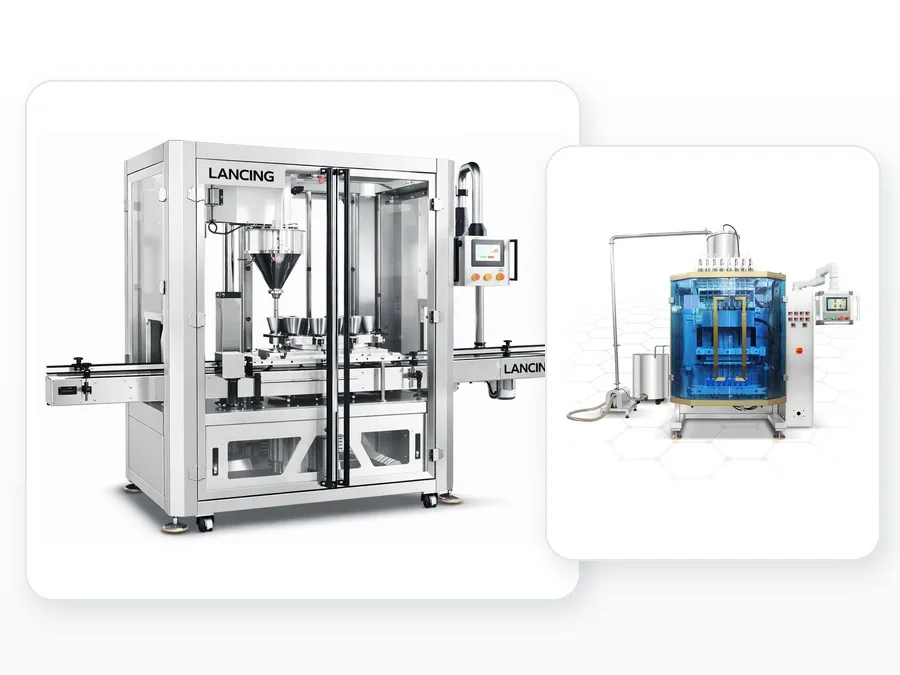
An auger filler may be suitable for some larger powder bags, especially where controlled dosing and product cut-off are important. For heavier sacks or products with variable density, a weigh filling route or weigh-feedback arrangement may need to be compared before the machine is selected.
The practical decision depends on target weight, powder density, bag mouth size, bag support, operator handling, dust release and how the final net weight will be checked.
Bigger packs usually make handling, weighing and dust control as important as the dosing head.
| Question | What to confirm | Why it affects the filler |
|---|---|---|
| Is the bag self-supporting? | Check bag stiffness, mouth size and clamp requirement. | Unsupported bags can collapse, spill powder or change fill height. |
| Is the fill sold by weight? | Define the legal and operational weight-check method. | Heavier fills can increase the cost of giveaway and underfill risk. |
| Is product density stable? | Compare density between normal and difficult batches. | A variable powder may favour weigh feedback or checkweighing. |
| How will the bag be closed? | Confirm stitching, heat sealing, clipping or manual closure. | The closing stage may set the real line speed and dust-control needs. |
The way the bag is held can decide operator workload and spill control.
For larger packs, small percentage errors can become significant absolute weight differences.
Dust may arise from hopper loading, filling and bag removal, so extraction should not be left until installation.
These answers help decide whether an auger-based route is worth testing for the product and pack.
An auger filler may be able to fill 5kg or 10kg bags if the powder density, tooling envelope, bag opening and support system are suitable. The answer should be based on the actual product and target weight, not only the bag size.
Weigh filling should be compared when the product density varies, the target weight is high, giveaway is costly or legal weight control is critical. Auger dosing can still be part of a weigh-assisted route if it gives good product cut-off.
The bottleneck may be bag loading, clamping, filling, settling, weighing, cleaning, closing or palletising. Larger packs often need a complete line view rather than a filler-only speed discussion.
Provide representative product, normal and difficult batches, empty bags, target weights, closure details and the intended weighing method. If extraction is expected, provide dust and safety information early.
Include product samples, fill target, pack format, target output and any cleaning, dust-control, sealing, coding or integration requirements.