Use real samples
A small auger filler should be tested with representative powder rather than only a free-flowing substitute.
Use compact auger filling for product development, pilot packing and short runs where repeatable dosing matters but a full automatic line is not yet justified.
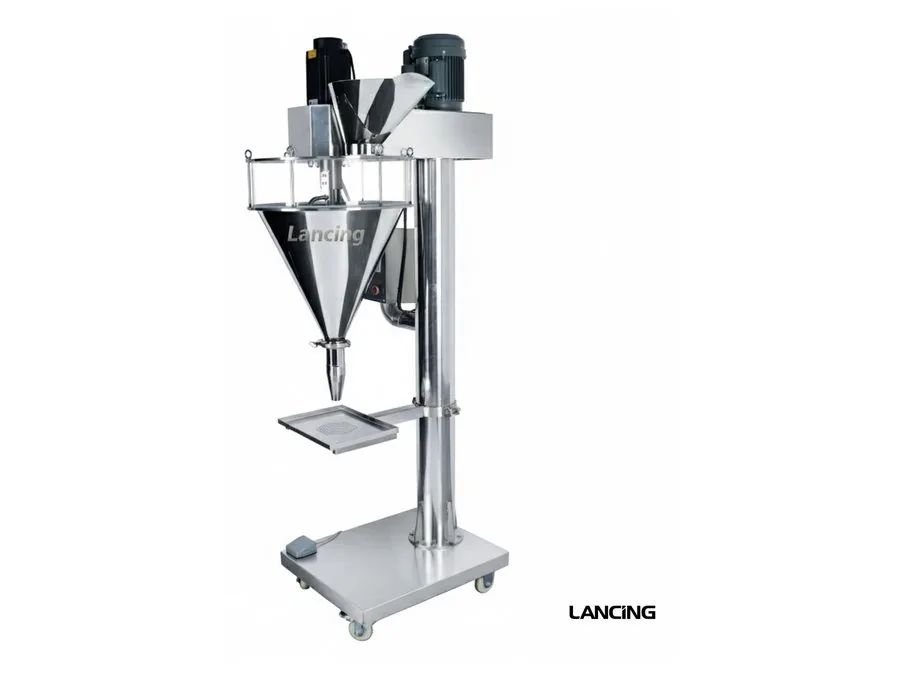
A lab scale powder filling machine is useful when a business needs repeatable small-batch powder dosing for product development, samples, pilot launches or low-volume production. The machine route should still be based on the real powder, fill target, container and cleaning requirement, because a poor bench process can create misleading scale-up expectations.
The strongest trials use the intended powder, container and closure method rather than only a dry run with substitute material.
A useful quote depends on more than the product name. These checks help choose a realistic machine route.
| Factor | What to check | Why it matters |
|---|---|---|
| Trial batch size | Number of fills per batch and how often batches run | Shows whether a benchtop route is enough or a floor-standing system is sensible |
| Powder behaviour | Flow, dust, clumping, aeration and settling | These factors influence hopper, tooling and weighing checks |
| Future scale-up | Likely production target after product launch | Avoids buying a machine that cannot support the next stage |
| Cleaning method | Dry wipe, parts removal or deeper clean-down | Important for product changes and hygiene expectations |
A small auger filler should be tested with representative powder rather than only a free-flowing substitute.
Keep a simple record of tooling, speed, fill target and product condition so the result can be repeated.
If production may increase, ask how the same product would move into semi-automatic or automatic filling.
These answers are written to help production, engineering and procurement teams prepare a realistic enquiry.
Often the two terms overlap, but a lab scale powder filler is specified around trials, samples and low-volume batches while a tabletop auger filler describes the machine format. The useful question is whether the equipment can dose the real product consistently enough for the intended pack and batch size.
A lab powder filler can support very small production runs, but output, operator handling, hopper capacity and cleaning time may limit it. If the product is expected to grow, the pilot machine should be chosen with a clear path to semi-automatic or automatic filling.
Send the production powder, target containers or pouches, fill target, closure method and expected tolerance. If the product is hygroscopic, dusty, aerated or blended, provide enough sample to test repeatability after normal handling.
Weigh feedback is useful when the fill target is tight, product density changes or the project needs evidence of repeatability. A simple volumetric auger route may be enough for less critical sampling work, but this should be checked with actual fills.
Include product samples, fill target, pack format, target output and any cleaning, dust-control, sealing, coding or integration requirements.