Use representative product
Fine powders are sensitive to humidity, storage and batch condition.
Specify fine powder filling around dust, flow, caking, bulk density and pack closure because fine products can behave very differently from coarse free-flowing materials.
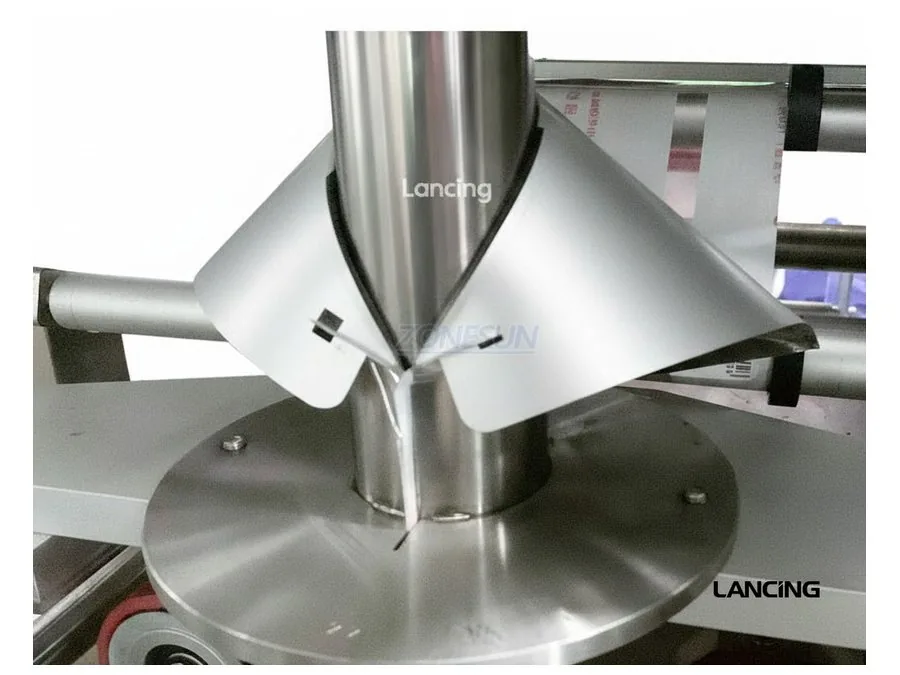
Fine powder filling can be difficult because the product may aerate, cling, bridge, cake or produce airborne dust during hopper loading and dosing. Auger filling may still be suitable, but hopper agitation, tooling, nozzle position, extraction and acceptance checks should be matched to the specific powder.
The same product category can change by particle size, moisture, storage condition and supplier, so sample testing is important before final specification.
A useful quote depends on more than the product name. These checks help choose a realistic machine route.
| Factor | What to check | Why it matters |
|---|---|---|
| Aeration | Whether the powder becomes fluffy after handling | Affects fill volume, headspace and pack settling |
| Cohesion | Whether the powder bridges or clings | Changes hopper and tooling choices |
| Dust release | Dust at hopper loading, cut-off and closing | Influences extraction, guarding and cleaning |
| Cut-off | How cleanly the powder stops falling | Important for weight consistency and seal or rim cleanliness |
Fine powders are sensitive to humidity, storage and batch condition.
Extraction should remove dust without disturbing the fill path.
A correct weight can still look underfilled or overfilled after the powder settles.
These answers are written to help production, engineering and procurement teams prepare a realistic enquiry.
An auger filler can handle many fine powders, but suitability depends on flow, dust, cohesion, aeration and the required pack format. Trials should check hopper behaviour, cut-off, airborne dust and repeatable weight rather than only whether the powder falls through the nozzle.
Fine powder can give inconsistent fills when bulk density changes, the hopper level varies, material bridges, product clings to the tooling or powder continues to fall after the auger stops. The control method should be matched to the real cause.
Not always, but dusty or hazardous fine powders should be assessed for operator exposure, hygiene and cleaning. Extraction must be designed so it captures dust without pulling product away from the container.
Opening diameter, fill height, headspace, rim cleanliness and closure method all matter. A narrow neck, static-prone container or pouch seal area can change the recommended nozzle and filling method.
Include product samples, fill target, pack format, target output and any cleaning, dust-control, sealing, coding or integration requirements.