Plan the full container path
Include empty drum presentation, fill point, closing and removal.
Plan drum powder filling around container size, target weight, filling access, dust control and how the filled container will be weighed, closed and moved safely.
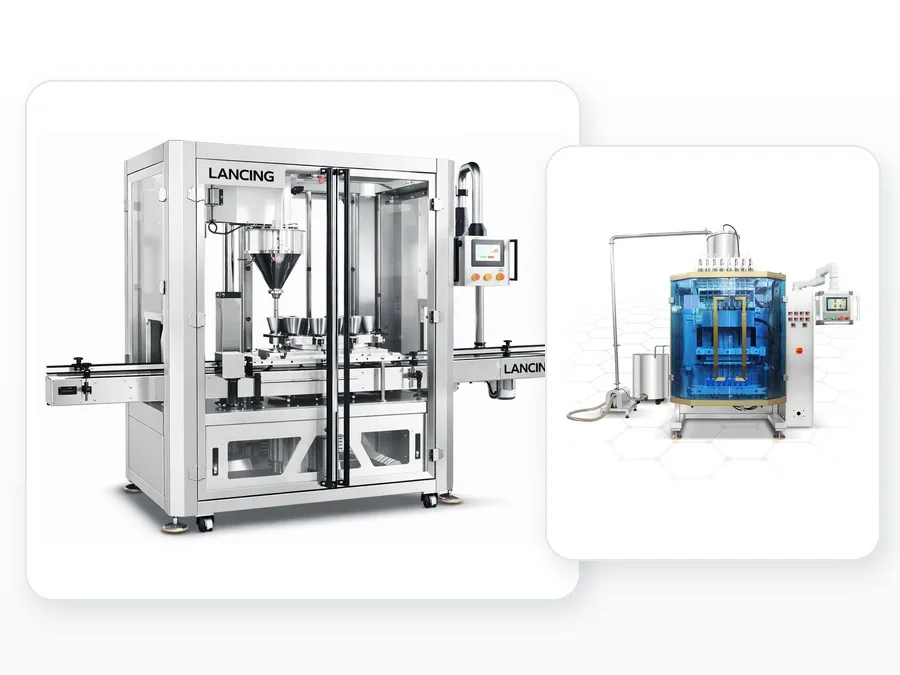
Drum powder filling should be specified as a complete handling task, not only as a dosing machine. The project should consider container presentation, filling height, target weight, dust control, operator reach, checkweighing and movement of the filled drum.
For heavier fills, the filling equipment may need to work with conveyors, lift tables, scales or other handling aids so the line can run safely and consistently.
Large packs change the filling problem because container handling and weight verification become part of the process.
| Specification area | What to check | Why it matters |
|---|---|---|
| Container access | Opening diameter and fill height | Determines nozzle access and whether lift or height adjustment is required |
| Weight control | Gross, net or checkweighing method | Important for giveaway and acceptance criteria |
| Product handling | Dust, aeration and settling | Affects headspace and how the drum should be topped or settled |
| Operator handling | Manual, conveyor or lifted movement | Determines safe workflow and line layout |
Include empty drum presentation, fill point, closing and removal.
Heavy packs may need weighing and handling equipment designed into the line.
Large open containers can release dust during loading and filling.
These answers are written to help production, engineering and procurement teams prepare a realistic enquiry.
An auger filler can be used for some drum powder filling applications, but the final route depends on fill weight, drum opening, filling height, product behaviour and how the full container is moved and checked.
Drum filling often needs a clear weighing plan because a small percentage variation can be commercially significant at high fill weights. The method may involve a platform scale, checkweighing or a controlled sampling process.
Drum filling involves larger fill weights, bigger dust release, greater operator-handling issues and more emphasis on full-container movement. The filler, scales and handling equipment should be planned together.
Useful information includes drum dimensions, target weight, powder bulk density, filling rate, whether liners are used, closing method and any dust or manual-handling constraints.
Include product samples, fill target, pack format, target output and any cleaning, dust-control, sealing, coding or integration requirements.