Volumetric auger filling compared with weigh-controlled filling.
The best control method depends on the value of the product, tolerance target and how stable the powder density remains.
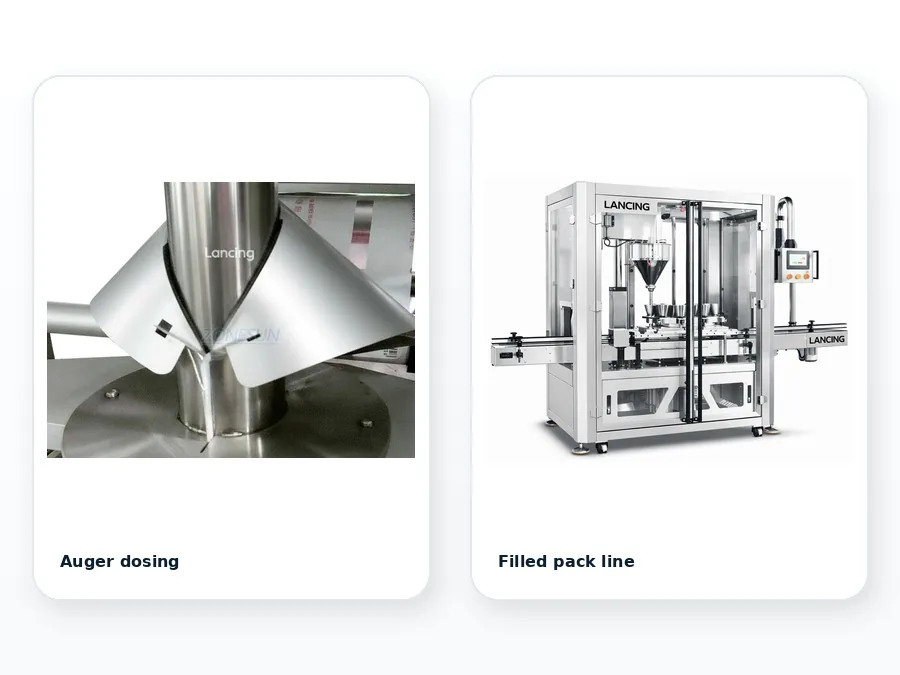
Start with the product, pack and required output.
Volumetric auger filling doses a controlled volume, which can be very effective when bulk density is stable. Weigh-controlled filling measures weight directly or feeds back weight information to improve control.
The decision should consider fill size, tolerance, product cost, speed and compliance expectations. In some cases, a simple volumetric filler with a checkweigher gives a strong balance of speed and assurance.
Details that help narrow the specification
- Target tolerance and product value
- Bulk density variation
- Required speed
- Reject or feedback strategy
- Budget and complexity
Points to confirm before choosing equipment.
These checks help compare semi-automatic, automatic and line-integrated options against the way the product will actually be packed.
Confirm bulk-density stability and whether volumetric dosing can meet the agreed fill tolerance.
Discuss whether direct weight measurement is needed for the fill size, tolerance and required speed.
Define how downstream pack weights will be checked and which reject or feedback strategy is required.
Agree how weight information will feed back to auger dosing and assess the control method with the actual powder.
Common questions from machinery buyers.
Is weigh filling always more accurate?
It can be, but it may also be slower or more complex. Product behaviour still matters.
When is volumetric auger filling suitable?
When product density is consistent and the required tolerance is achievable.
Can both methods be combined?
Yes. Auger dosing can be paired with weigh feedback or downstream checkweighing.
Send the product and pack details.
We can help compare the auger filler, powder feed and line options that fit your production requirement.