Jar, tub or pouch: choosing the right powder filling format.
The pack format affects every part of the line: dosing, settling, closing, sealing, labelling and finished-pack handling.
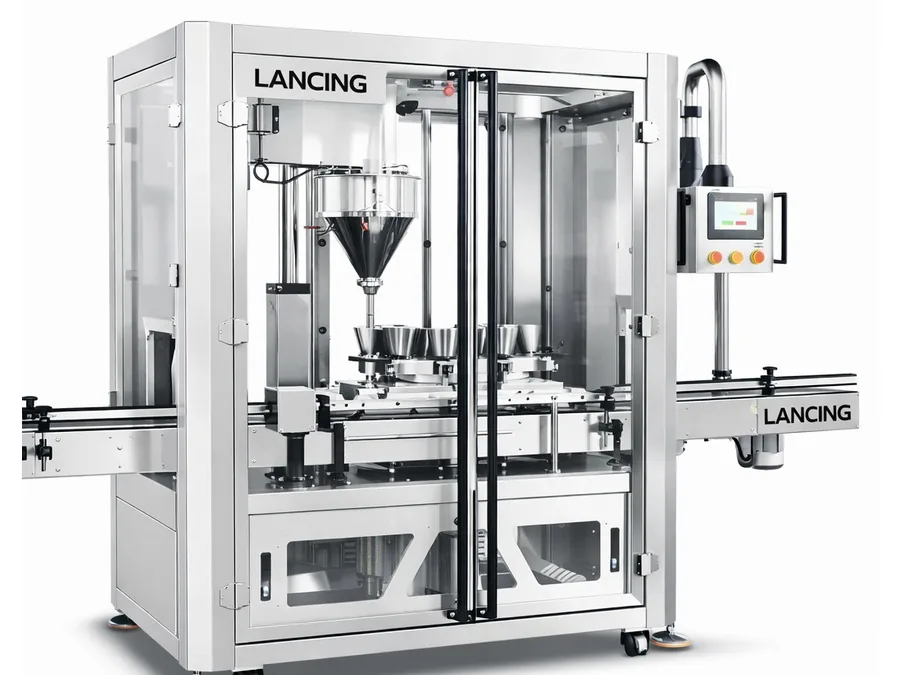
Start with the product, pack and required output.
Rigid containers are usually easier to present beneath a filling head and can continue into capping or induction sealing. Pouches and bags may reduce packaging weight but need careful attention to opening, filling, dust and sealing.
The best format depends on the product, brand presentation, output target and how the finished pack will be handled. Consider the full line before committing to a container or pouch.
Details that help narrow the specification
- Container opening or pouch mouth size
- Fill weight and headspace
- Closing or sealing method
- Dust control around the pack
- Labelling, coding and finished-pack handling
Points to confirm before choosing equipment.
These checks help compare semi-automatic, automatic and line-integrated options against the way the product will actually be packed.
Plan downstream handling at the same time as the filler so the finished pack is reliable.
Check how each pouch will be opened, supported, filled and presented for sealing. Trial the actual mouth size and powder rather than comparing nominal pack capacity alone.
Assess powder contamination at the sealing or closing surface after filling and settling, using the intended pouch film or container and closure.
Compare the filled and closed pack for dust, shape, label or code position and handling damage, as well as the target fill weight.
Common questions from machinery buyers.
Are jars easier to fill than pouches?
Often they are easier to present and close, but the best choice depends on the product and market.
Can the same auger fill jars and pouches?
Sometimes, but the pack handling and filling head may differ.
What should be decided first?
Product, fill weight, pack format and output target should be reviewed together.
Send the product and pack details.
We can help compare the auger filler, powder feed and line options that fit your production requirement.