Stable hopper level
Level control can improve repeatability by reducing large changes in product head pressure.
Choose the hopper-loading method around product flow, dust, segregation risk, layout, cleaning needs and how the auger filler will maintain a stable feed level.
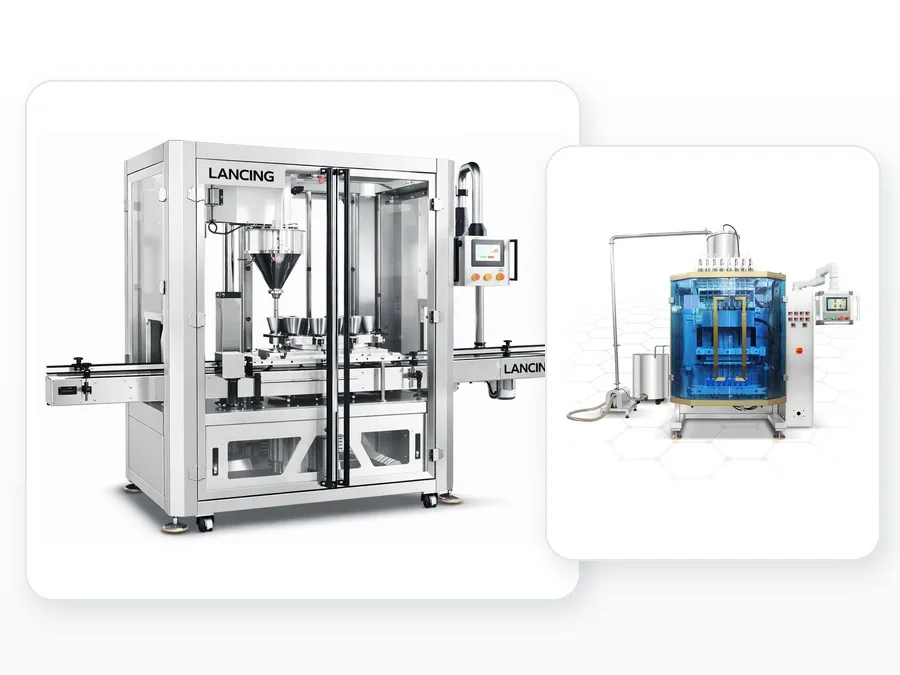
The choice between vacuum loading and screw feeding depends on the powder, transfer distance, dust control, cleaning needs and floor layout. The aim is to keep the auger filler supplied without damaging the product, changing the blend or creating unnecessary dust release.
For some projects, manual loading may be acceptable. For higher output or enclosed transfer, the feeding method should be tested with the product and the required hopper-level control.
The same product name can behave differently by supplier, batch, storage condition, pack format and output target.
| Factor | What to check | Why it matters |
|---|---|---|
| Manual loading | Simple and flexible for trials or low output. | May create operator handling and dust issues at higher volumes. |
| Screw feeder | Positive mechanical transfer from a lower hopper. | Can suit many powders but must be checked for product damage, bridging and cleaning. |
| Vacuum loader | Enclosed transfer by air movement. | Can reduce manual lifting but may affect dusty, fragile or segregating products. |
| Bulk bag discharge | Useful for higher-volume supply. | Needs integration with the feeder and filler level control. |
Level control can improve repeatability by reducing large changes in product head pressure.
Transfer equipment can separate blends if particle sizes or densities differ.
Frequent product changes should be considered before choosing a feed system.
These answers are written to help production, engineering and procurement teams prepare a realistic enquiry.
Neither is automatically better. A screw feeder may suit controlled mechanical transfer, while a vacuum loader may suit enclosed transfer over a different route. The correct choice depends on powder behaviour, cleaning, dust, layout and output.
Yes. Large changes in hopper level, inconsistent product feed or segregation during transfer can affect auger filling repeatability. The feed system and level controls should be reviewed with the filler.
Manual hopper loading may be acceptable for low output, trials or small-batch production. It becomes less suitable where manual handling, dust exposure, process consistency or output become limiting factors.
Send representative powder, including the normal production condition and any blends or inclusions. Transfer testing should use the same powder state expected in production.
Include product samples, fill target, pack format, target output and any cleaning, dust-control, sealing, coding or integration requirements.