Container geometry
A nominal volume may include shoulder or neck space that is not usable during powder filling.
Powder fill volume is approximately the fill mass divided by the powder bulk density, but the practical pack volume also depends on aeration, settling and batch variation. The selected container needs enough usable volume for the loose fill, a controlled margin for variation and sufficient headspace for clean filling, handling and closure.
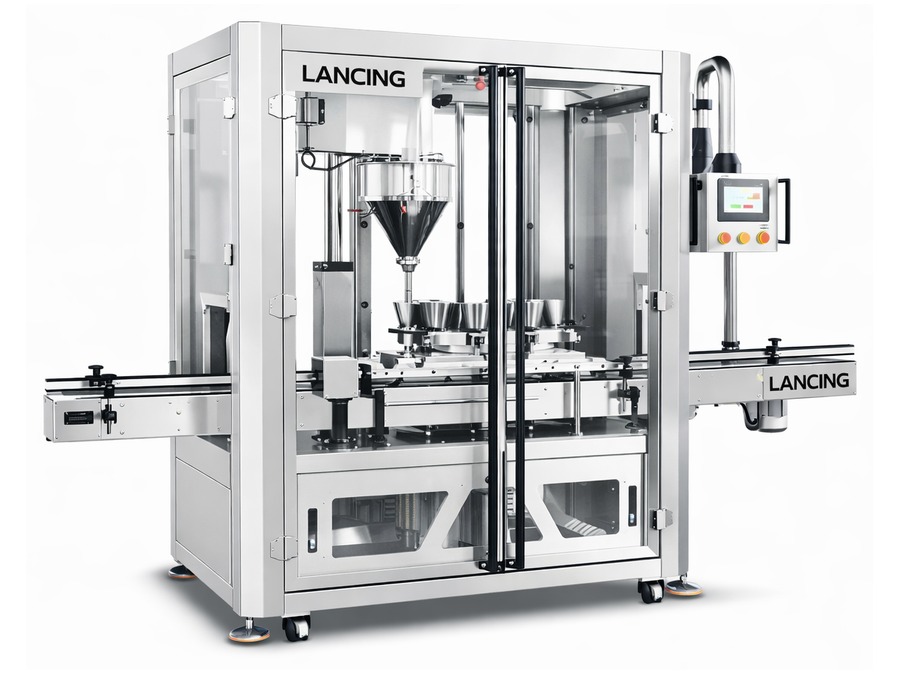
Auger fillers control a volume of powder and the production team normally verifies the result by mass. A low-density, highly aerated powder occupies more space than the same mass of a dense or settled powder. That is why two powders with the same target weight may need different containers, nozzles and filling sequences.
For an initial estimate, use the loose bulk density that reflects the condition at filling. The relationship is: approximate volume = mass ÷ bulk density. As a purely hypothetical calculation, a 500 g fill at 0.5 g/ml occupies about 1,000 ml before allowing for variation, aeration, headspace or container geometry.
The calculation is a starting point, not a pack guarantee. Measure real samples in the intended process because transfer, agitation, screw action and settling can change the volume seen in production.
Use the sequence as a project checklist, then confirm the final arrangement with representative product and packs.
| Stage | What to check |
|---|---|
| Measure representative density | Record loose density in a repeatable method and note whether the sample has been aerated, settled, stored or conditioned. |
| Calculate an initial volume | Divide the target mass by the representative density using consistent units. |
| Allow for variation | Consider batch density, aeration after feeding, product settling and the highest required fill in the range. |
| Check usable pack volume | Account for shoulders, necks, gussets, seal zones, closure components and the volume that cannot be filled cleanly. |
| Trial the finished pack | Confirm fill height, rim or seal cleanliness, settling, closure, transport and customer presentation with real samples. |
A nominal volume may include shoulder or neck space that is not usable during powder filling.
Feeders and transfer can entrain air, increasing the apparent volume immediately after dosing.
Vibration and time can lower the fill height after the pack leaves the filler.
Caps, scoops, liners, zips and heat-seal areas need clear space and clean contact surfaces.
These answers describe the practical variables that should be checked before a machine or process is accepted.
Approximate powder volume is calculated by dividing the required mass by the representative bulk density. Use compatible units and a density measured in a condition that resembles filling. The result estimates the powder volume only; it does not include headspace, batch variation, aeration, container shoulders or the space required for closure.
If density is quoted as a range, calculate both ends and trial the worst practical pack condition. See the bulk-density guide for the role of loose and settled density.
The same fill weight can occupy a different volume because powder particles can pack with more or less air between them. Product batch, moisture, particle size, transfer method, agitation and settling all affect the apparent bulk density. The mass can remain correct while the fill height changes visibly.
Investigate whether the pack is being filled in a loose, aerated condition and then settling later. A fill-height change is not automatically a weight error, but it can affect closure, label presentation and customer perception.
There is no universal headspace percentage for powder packs. The required space depends on powder aeration, fill-height variation, displaced air, closure or seal design, scoops or inserts, transport settling and the desired presentation. The pack should be trialled at the highest expected loose volume, not only at the average settled condition.
For pouches, preserve the clean seal zone and allow for gusset opening. For bottles and tubs, protect the rim and leave the clearance needed for caps, liners or induction sealing.
Vibration and settling can reduce fill height by allowing particles to rearrange and release trapped air. The effect may occur on a conveyor, during capping, in case packing or during transport. It can improve pack closure, but uncontrolled settling can also change appearance or contribute to segregation in mixed products.
If settling is part of the intended process, define where and how it occurs, then verify the final pack after that step. Avoid using excessive vibration without checking product integrity and blend uniformity.
Send the target fill, density information, powder sample and production-intent container so Lancing can review fill height, headspace and nozzle access together.
Loose and settled bulk density help estimate volume, but a production trial should also record immediate fill height, conveyor handling, closure timing and the finished pack appearance.
Review aeration and settling after filling