Label by function
Use labels that operators can connect to the product and pack.
Keep tooling, tubes, funnels and change parts organised so powder changeover can be repeated without confusion or contamination risk.
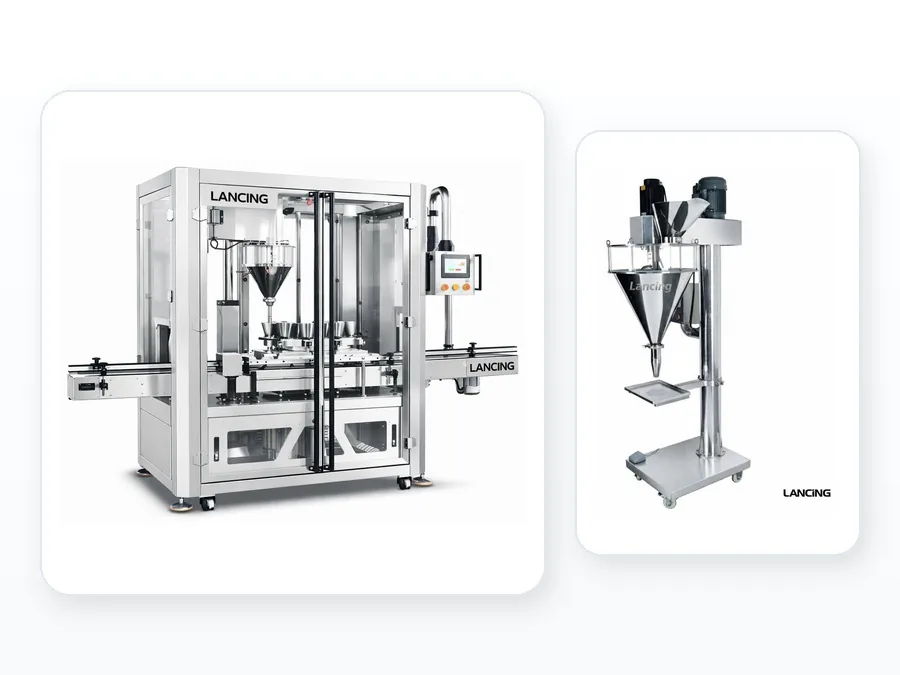
Change-part storage matters because auger screws, tubes, funnels, container guides and nozzles can be product-contact or format-critical items. If they are mixed, damaged or stored dirty, the next changeover becomes slower and less reliable.
A simple storage and labelling method can reduce set-up errors and improve confidence when products, fill weights or containers change regularly.
The best answer depends on the powder, equipment layout, operator workflow and acceptance criteria.
| Factor | What to check | Why it matters |
|---|---|---|
| Part identification | Clear label or code for each change part | Prevents fitting the wrong part |
| Cleaning state | Clean, awaiting clean or quarantined | Reduces confusion between runs |
| Storage protection | Damage, dust and loss control | Protects tooling and repeatability |
| Set-up record | Which parts belong to which product and pack | Speeds changeover and training |
Use labels that operators can connect to the product and pack.
Avoid storing cleaned parts beside parts awaiting cleaning.
Check wear, damage and seals before the next run starts.
These answers are written to help production, engineering and procurement teams prepare a realistic enquiry.
Typical change parts can include auger screws, tubes, funnels, nozzles, container guides and format-specific handling parts. The actual set depends on the machine, product and pack range.
Change parts should normally be cleaned and dry before storage unless a controlled cleaning workflow deliberately separates items awaiting cleaning. The important point is that operators can clearly identify the status.
Use labelled parts, a cleaning checklist, inspection before reassembly and a storage location that keeps each product or format set together. Complex lines may also need supervisor sign-off.
For buyers, change-part storage is a practical ownership question. Explaining it helps production teams compare suppliers on operating reliability rather than just machine price.
Include product samples, fill target, pack format, target output and any cleaning, dust-control, sealing, coding or integration requirements.