Adding labelling and coding to a powder filling line.
The label and code must be applied to a stable, clean pack at the correct point in the line.
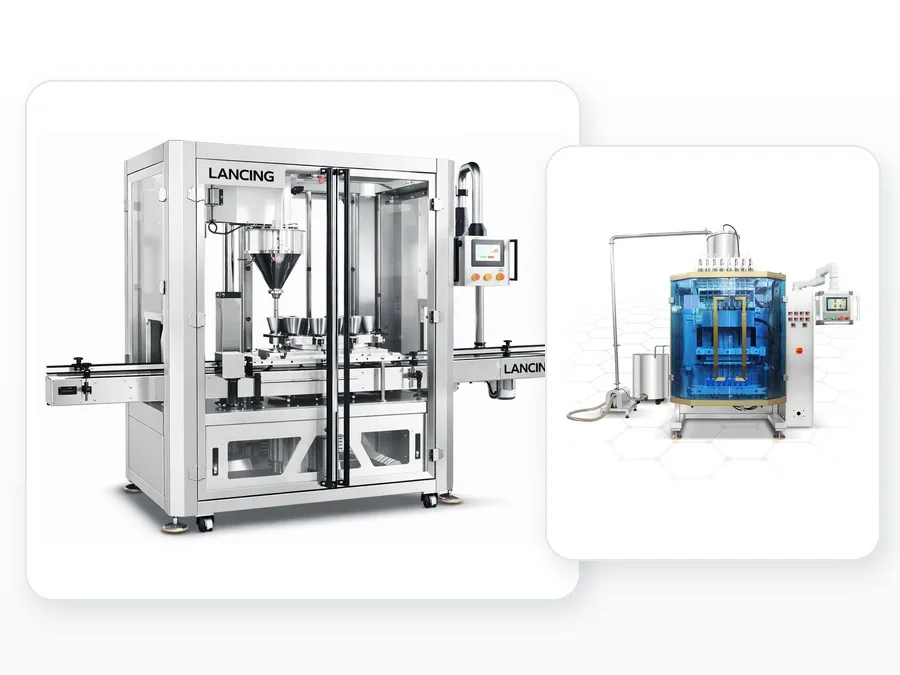
Start with the product, pack and required output.
After filling and closing, many powder packs need labels, date codes, batch numbers or barcodes. The best integration point depends on pack type, surface material, production speed and inspection requirements.
Dust and container handling can affect label adhesion and code readability. Planning the full line avoids layout problems and leaves space for rejects, accumulation and operator access.
Details that help narrow the specification
- Label type and pack surface
- Code position and print technology
- Line speed and conveyor layout
- Dust or residue on the pack
- Inspection and reject requirements
Points to confirm before choosing equipment.
These checks help compare semi-automatic, automatic and line-integrated options against the way the product will actually be packed.
Choose a point where the pack is stable, closed and sufficiently free of powder for the label to adhere. Leave access for adjustment and inspection.
Provide the pack material, code content, position and line speed so the print method can be assessed on actual pack samples.
Check guides and spacing at labelling and coding, including stops and restarts, so the intended surface reaches the applicator or print head consistently.
Allow for downstream stops, rejects and operator access without creating unstable queues of filled packs. Review this space with the full conveyor layout.
Common questions from machinery buyers.
Can labelling be part of the same line?
Yes. Labelling and coding can be planned after filling, capping or sealing.
Does dust affect labels?
It can reduce adhesion or mark the pack, so dust control should be reviewed.
What should I send for coding advice?
Send pack samples, code content, code position and required line speed.
Send the product and pack details.
We can help compare the auger filler, powder feed and line options that fit your production requirement.