Headspace and apparent volume
Fine powders may settle after filling, so the filled pack should be assessed after normal handling and closing.
Plan creatine powder filling around bulk density, dust behaviour, pack opening, target weight and the way the finished tub, pouch or sachet will be checked and closed.
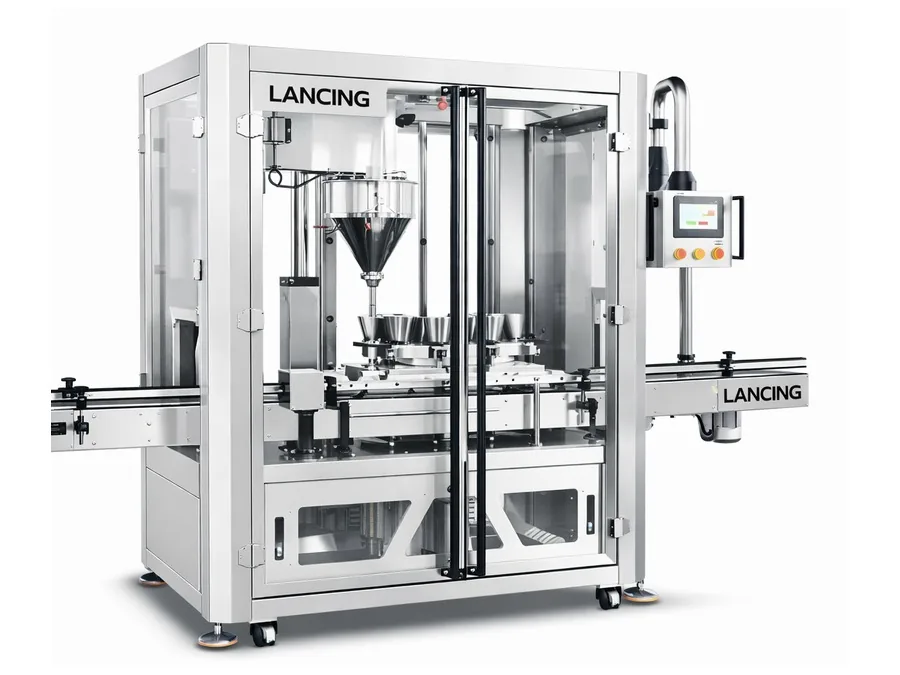
A creatine powder filling machine should be specified around the actual powder grade, the intended fill weight, the pack opening and the required checking method. Auger dosing can be a good route for fine sports-nutrition powders, but repeatability still depends on powder condition, hopper level, tooling and calibration.
The best first step is to test representative production powder and packs rather than assuming that all supplement powders behave like protein powder. Creatine can raise different questions around dust, apparent volume, container headspace and cleaning between products.
The right filler and line layout depend on the powder and final pack, not the product name alone.
| Question | What to confirm | Why it affects the filler |
|---|---|---|
| Is the creatine fine or dusty? | Check dust release at hopper loading, nozzle discharge and pack settling. | Dust may affect extraction, cleaning, seal quality and operator exposure controls. |
| Is the fill into a tub, jar or pouch? | Measure opening size, fill height, neck or rim detail and closure method. | The nozzle, pack support and downstream equipment differ by format. |
| How tight is the weight tolerance? | Define the weighing or checkweighing method and adjustment rules. | Open-loop volumetric dosing may need weigh feedback or post-fill checks. |
| How often will products change? | List all products to be run on the same filler. | Tooling, cleaning access and allergen or cross-contact controls may decide the execution. |
Fine powders may settle after filling, so the filled pack should be assessed after normal handling and closing.
If scoops, liners or tamper-evident seals are used, they should be included in the line discussion.
Supplement products often need clear batch identification, so coding position should be planned early.
These answers help decide whether an auger-based route is worth testing for the product and pack.
An auger filler can be suitable for creatine powder when the powder flows consistently enough for the selected screw, tube and hopper arrangement. Suitability should be confirmed with the actual creatine product, target weight, pack opening and checking method.
Not always. Creatine and protein powders can differ in density, particle size, dust, aeration and settling. A machine that works well for one supplement powder should still be trialled with the other before final tooling or speed assumptions are made.
Useful checks include consistent hopper level, approved tooling, controlled recipe settings, representative product conditioning and regular weight verification. If product density varies, weigh feedback or checkweighing may be needed to control giveaway and underfills.
Yes, creatine can be packed into compatible pouches if the opening, support method, dosing path and seal area are controlled. Powder in the seal zone should be assessed during trials because it can affect finished-pack integrity.
Include product samples, fill target, pack format, target output and any cleaning, dust-control, sealing, coding or integration requirements.