Gentle handling
Lower shear may protect particles but can reduce control over a poorly flowing blend.
An auger filler may be suitable for a fragile or abrasive dry product, but suitability cannot be assumed from the product name alone. The screw and tube apply shear and contact forces, while abrasive particles can accelerate wear. A representative trial should compare product integrity, segregation, fill consistency, dust and component condition before selection.
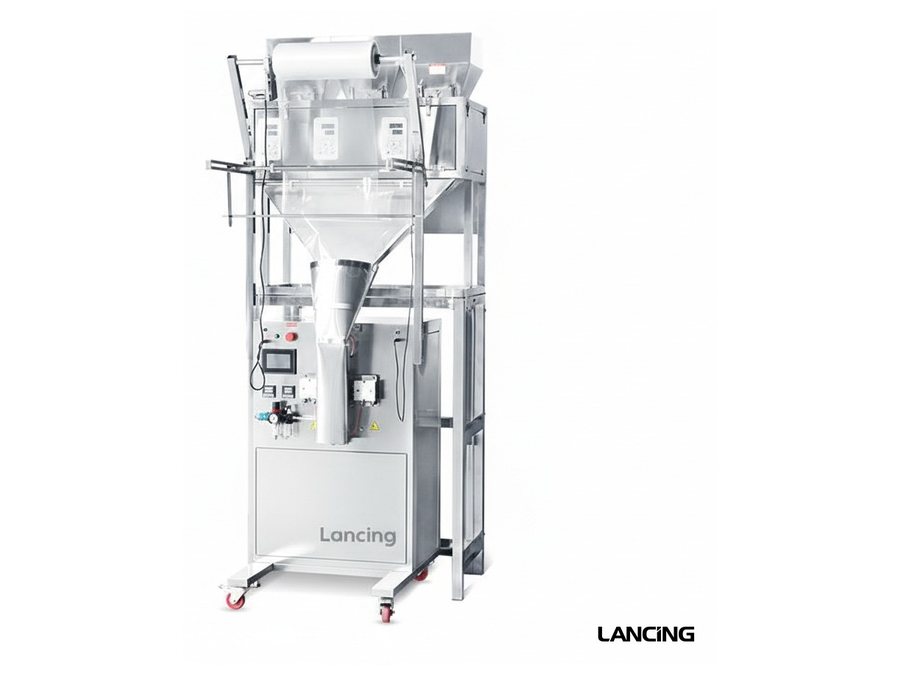
Fragile products may contain flakes, agglomerates, crystals or inclusions that break under shear. Abrasive products may flow reliably but wear the auger, tube, bearings, seals or contact surfaces. A product can present both risks at once, and the acceptable result depends on what the finished pack must look like and how much change is allowed through production.
Particle size alone does not decide suitability. Shape, hardness, moisture, binder, fine-particle content, blend composition and the clearance between the screw and tube all matter. A sample should therefore represent normal production variation, not only the easiest batch.
Where product integrity is critical, compare the auger route with gravity, vibratory or weighing methods. The alternative should be assessed for accuracy, dust, segregation, speed, cleaning and pack access rather than selected only because it appears gentler.
Use the sequence as a project checklist, then confirm the final arrangement with representative product and packs.
| Stage | What to check |
|---|---|
| Before-and-after sample | Compare particle size, appearance and fine content before dosing and after repeated circulation or filling. |
| Blend uniformity | Check whether heavy, light, fine or coarse components separate in the hopper, feeder or filled pack. |
| Dose repeatability | Record individual fills and watch for irregular refill of the auger flights or bridging above the inlet. |
| Contact and wear points | Inspect where the product rubs or becomes trapped, and agree a maintenance and spare-parts approach appropriate to the material. |
| Cleaning and carryover | Confirm whether worn or damaged product can lodge in clearances and whether the machine can be cleaned to the required standard. |
Lower shear may protect particles but can reduce control over a poorly flowing blend.
Harder or replaceable contact parts may extend service life but must remain appropriate for the product and cleaning regime.
A method that avoids breakage may still separate particles by size or density during feed and transfer.
Abrasive service can make inspection intervals, tooling replacement and contamination control more important.
These answers describe the practical variables that should be checked before a machine or process is accepted.
An auger can damage fragile inclusions when particles are pinched, sheared or repeatedly circulated between the screw, tube and hopper agitation. The extent depends on particle strength, clearance, screw geometry, speed, feed condition and how long the product remains in the machine.
Assess the finished dose, not only the material left in the hopper. Fine particles created during dosing may settle differently in the pack or alter appearance even when the average fill weight remains acceptable.
Abrasive powders can shorten the service life of screws, tubes, seals, bearings and product-contact surfaces. Wear may enlarge clearances, change the dose, create rough areas that retain product or release material into the process. Inspection frequency and spare-part planning should reflect the actual material and duty cycle.
The machine supplier needs the product identity, safety data and a representative sample to review contact materials and likely wear points. Do not infer suitability from stainless-steel construction alone.
A weigh or vibratory filler should be considered when the product is free-flowing, contains fragile pieces or cannot tolerate the shear and recirculation of an auger. It may also suit mixed granules better, although segregation, cut-off, dust and container access still need to be tested.
Use a structured comparison rather than assuming one technology is universally superior. The auger versus linear-weigher guide explains the main selection factors.
A product trial should measure fill results and also assess particle damage, segregation, dust, product build-up, flow interruptions, pack presentation and cleaning. For abrasive products, inspect the contact path after a meaningful run and record any visible wear or material retention.
Agree acceptance criteria before the trial so the decision is not based on appearance alone. See the guidance on scaling trials into production.
Send a representative sample and explain which particle, appearance and fill characteristics must be preserved so Lancing can compare credible filling routes.