Control exposure
Minimise open handling if the powder cakes or absorbs moisture.
Specify filling for vitamin, electrolyte and hydration powders around moisture control, dose consistency, blend behaviour and the finished retail pack.
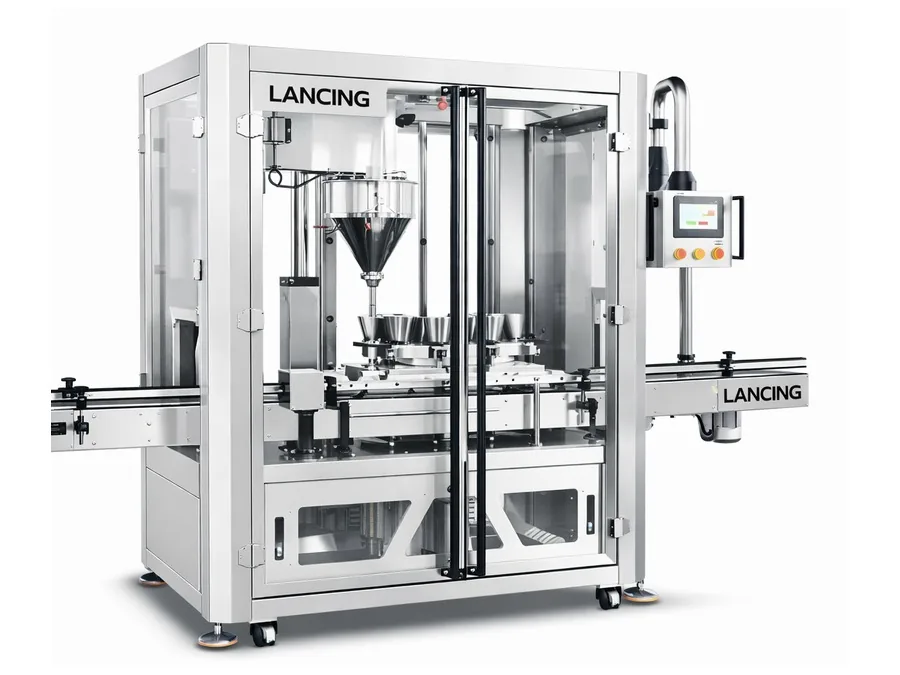
Vitamin and electrolyte powder filling usually requires attention to dose consistency, hygroscopic behaviour, flavour or colour carry-over, dust and pack moisture protection. Auger filling may suit tubs, pouches or sachets, but the powder and pack should be tested together.
If a formula contains several ingredients, the process should also check blend uniformity and product settling after filling.
A useful quote depends on more than the product name. These checks help choose a realistic machine route.
| Factor | What to check | Why it matters |
|---|---|---|
| Moisture sensitivity | Does the powder absorb moisture or cake? | Changes handling, environment and packaging checks |
| Serving size | Fill weight and scoop or dose expectation | Affects tooling and weighing strategy |
| Pack format | Tubs, sachets, pouches or stick packs | Changes filling, sealing and coding requirements |
| Changeover | Flavours, colours and actives on the same line | Influences cleaning method and evidence needed |
Minimise open handling if the powder cakes or absorbs moisture.
Tub fill height and scoop placement can affect customer presentation.
Supplement projects often benefit from fill-weight and changeover records.
These answers are written to help production, engineering and procurement teams prepare a realistic enquiry.
Many electrolyte powders can be filled with an auger filler, but moisture sensitivity, particle size, dust and flavour carry-over should be checked. Trial filling should use the intended container and closure method.
Tubs suit larger retail formats and scoop dosing, while sachets and stick packs suit portioned servings. The better pack depends on serving size, product stability, target output and sealing requirements.
Checkweighing is often useful for supplement powders because serving size and label quantity matter. The required control method depends on tolerance, pack size and the applicable quantity-control process.
Provide product samples, safety or handling information, target fill, pack sample, scoop or serving requirements, cleaning expectations and any coding or traceability needs.
Include product samples, fill target, pack format, target output and any cleaning, dust-control, sealing, coding or integration requirements.