Closure planning
Powder filling should be reviewed with the closure stage so loose product does not interfere with seals, lids or seams.
Plan powder filling into cans and tins around the opening diameter, fill weight, headspace, closure method and the checks needed before the pack leaves the line.
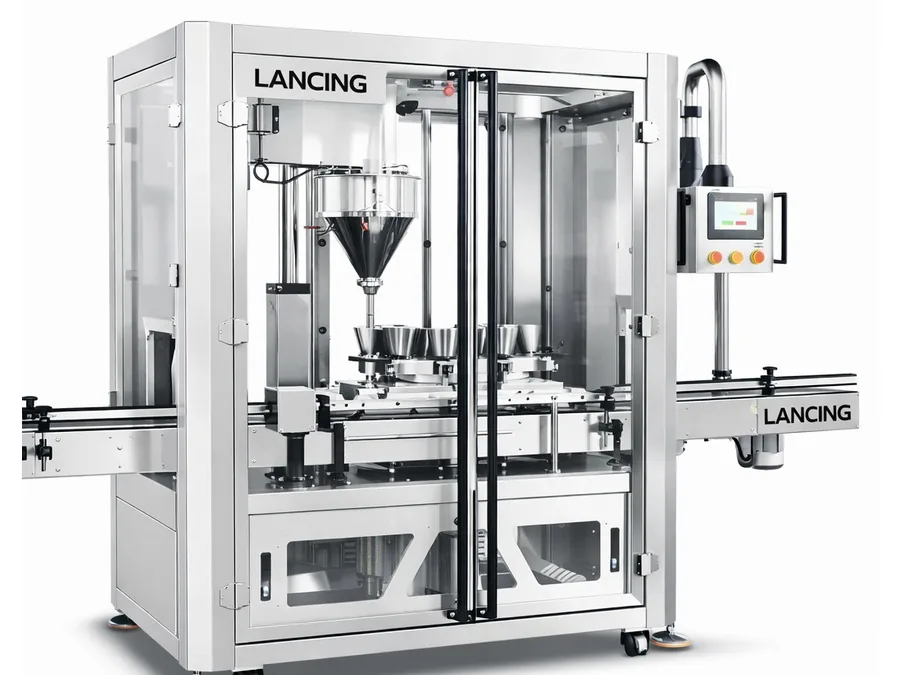
A powder filling machine for cans and tins should be specified around the actual container opening, powder behaviour, target fill weight and closure process. Auger dosing can suit many dry powders, but the discharge path, headspace and post-fill handling need to match the pack before output assumptions are made.
The can or tin may continue to induction sealing, lid placement, seaming, labelling or coding. These downstream steps can affect the required container indexing, accumulation and finished-pack checking.
The same product name can behave differently by supplier, batch, storage condition, pack format and output target.
| Factor | What to check | Why it matters |
|---|---|---|
| Wide-mouth tins | Review dust, fill height and lid/foil seal clearance. | Wide openings can make filling easier but still need rim cleanliness and headspace checks. |
| Composite cans | Confirm pack stability, closure and label/coding position. | Lightweight packs may need careful handling and controlled container movement. |
| Metal tins | Review earthing, dust and closure method with the wider site assessment. | The container material and powder type can affect line safety and handling decisions. |
| Small sample tins | Check dose range, tooling and changeover frequency. | Small fills may need different screw/tooling choices from large retail packs. |
Powder filling should be reviewed with the closure stage so loose product does not interfere with seals, lids or seams.
The apparent filled volume can change after vibration and handling, so pack samples should be checked after normal line movement.
Cans and tins sold by weight may need defined weighing or checkweighing controls after filling.
These answers are written to help production, engineering and procurement teams prepare a realistic enquiry.
Yes. An auger filler can fill powder into tins when the tin opening, fill target, powder flow and container handling are suitable. The filler should be selected with the actual tin, lid or seal and downstream checking method, not only from the fill weight.
The filling principle may be similar, but cans and tins can differ in stability, rim detail, closure method, label position and post-fill handling. These differences can change the indexing, accumulation and quality-control plan.
Rim contamination can be caused by dusty powder, poor nozzle position, overfilled containers, uncontrolled product cut-off or air movement around the fill point. Trials should check the filled rim before closure equipment is specified.
Useful details include the powder, bulk density, target weight, tin dimensions, opening size, closure method, output target, cleaning expectations and any weighing, coding or labelling requirements.
Include product samples, fill target, pack format, target output and any cleaning, dust-control, sealing, coding or integration requirements.