Powder clings to the nozzle
This may affect cut-off and cleanliness, but the root cause may include static, moisture, surface finish or airflow.
Static electricity can make powder cling to surfaces, disturb clean cut-off and, in a potentially explosive dust atmosphere, provide an ignition source. The correct response depends on the product, transfer materials, equipment construction and site classification, so earthing, bonding, hoses, clothing and any ionisation system must be selected through a competent application-specific assessment.
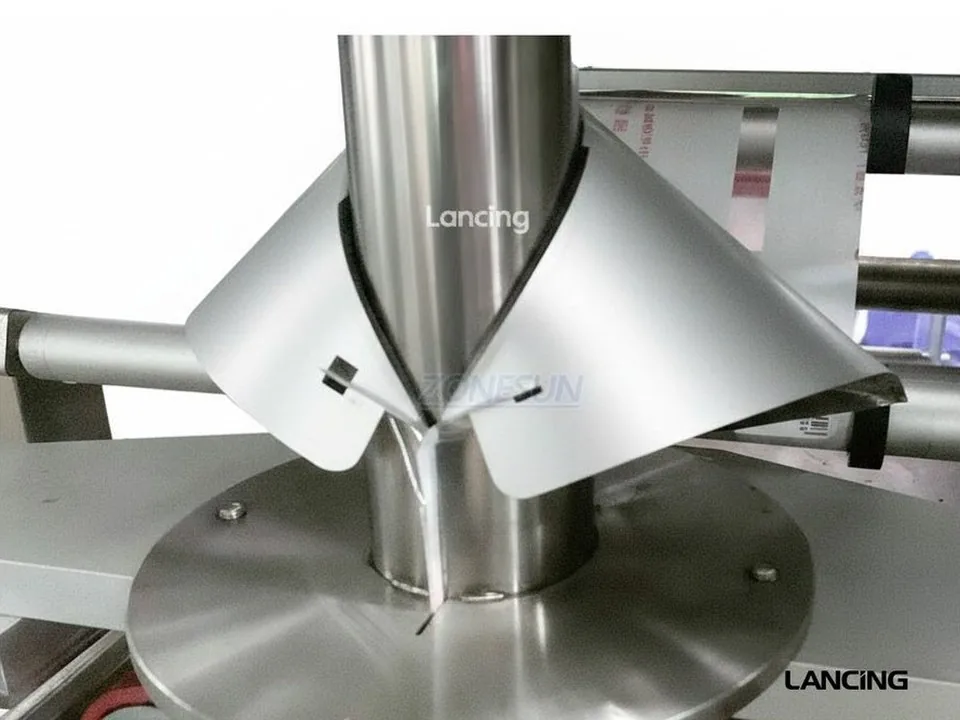
Powder can become charged as particles contact and separate from pipes, hoses, bags, tools and machine surfaces. The visible symptom may be dust clinging to a nozzle or pack, but the safety significance depends on whether a combustible dust cloud can form and whether accumulated charge can discharge with sufficient energy to ignite it.
The machine should not be assessed in isolation. Product unloading, conveying, hopper filling, extraction ducting, operator tools, pack materials and cleaning methods can all introduce conductive or insulating elements. Metallic parts that should be at the same electrical potential need a verified bonding and earthing strategy; isolated conductors and unsuitable hoses require particular attention.
An ioniser can reduce charge in some non-hazardous applications, but it is not a substitute for DSEAR assessment, suitable equipment selection, effective dust control or verified earthing. The final measures must follow the product data and the competent site risk assessment.
The checklist helps define questions for the site assessor and machine supplier; it is not a hazardous-area classification.
| Stage | What to check | Why it matters |
|---|---|---|
| Confirm the material hazard | Review the current safety data, dust explosibility information, minimum ignition energy where available and expected dust-cloud conditions. | Not every powder creates the same ignition risk, and product moisture or particle size can change behaviour. |
| Map charge-generating contact | List bags, liners, flexible hoses, vacuum lines, screw feeders, hoppers, tools and pack materials. | Charge may originate before the powder reaches the filler. |
| Identify isolated conductors | Check metal nozzles, tools, reinforcing wires, clamps and mobile equipment for a reliable bonding path. | A conductor that is not earthed can accumulate charge even when surrounding equipment is grounded. |
| Verify protective measures | Define bonding checks, earth-continuity checks, approved hoses, footwear/clothing and any extraction or enclosure requirements. | Controls must remain effective during production, cleaning, changeover and maintenance. |
| Control modifications | Review replacement hoses, tools, liners, filters and added equipment before use. | A seemingly minor material or connection change can alter the electrostatic path or hazardous-area suitability. |
This may affect cut-off and cleanliness, but the root cause may include static, moisture, surface finish or airflow.
Charged particles or air movement can carry dust towards rims, seal areas, labels or sensors.
A noticeable discharge signals charge accumulation, but the absence of a felt shock does not prove safety.
Replacement insulating materials or isolated metal fittings can create a different risk from the approved setup.
Static-control decisions must be based on the real powder and production environment, not a generic accessory list.
Static charge can attract fine particles to the nozzle, pack or nearby guards, but moisture, oily ingredients, surface roughness and airflow can produce similar symptoms. Observe when the build-up starts, which materials are involved and whether it changes with batch, humidity or transfer method.
Do not assume the cure until the cause has been checked. Cleaning or coating changes also need to be compatible with product-contact and safety requirements.
No. The filler should have the required protective earthing, but a powder-handling process may also contain flexible hoses, containers, tools, ducting and mobile equipment. Conductive components need a verified path, while insulating surfaces may require a different control strategy.
The site assessment should cover normal operation, filling, cleaning, maintenance and replacement parts.
An ioniser may help reduce charge on some exposed surfaces in an appropriate non-hazardous application, but suitability depends on the powder, zone assessment, cleaning regime and equipment certification. It must not be treated as a universal answer or as a replacement for bonding, earthing and dust control.
Any device introduced near a potentially explosive atmosphere must be assessed and selected for that environment by a competent person.
Confirm the replacement material, electrical characteristics, reinforcing construction, connection method and earth-continuity arrangement. A metal fitting attached to an insulating hose can become an isolated conductor if it does not have a reliable bonding path.
Record approved replacement parts and include relevant continuity or visual checks in the maintenance procedure.
No. Equipment selection depends on whether a potentially explosive atmosphere can occur, its extent and duration, the properties of the dust and the site controls. That determination belongs to the DSEAR assessment and hazardous-area classification, not to the descriptive word “dusty”.
Provide current product data and the site assessment before asking a supplier to confirm the required execution.
HSE guidance explains that combustible dust clouds can ignite and that static discharges must be considered in potentially explosive atmospheres. Final zoning, equipment selection and protective measures require a competent site-specific DSEAR assessment.
Send the current safety data, dust information, transfer method, filling format and any hazardous-area classification so the machine enquiry can distinguish process cleanliness from ignition-risk controls.