Use product data
Safety data and ingredient information help assess compatibility.
Specify contact parts around the real product, cleaning method and operating environment rather than relying on a generic stainless-steel description.
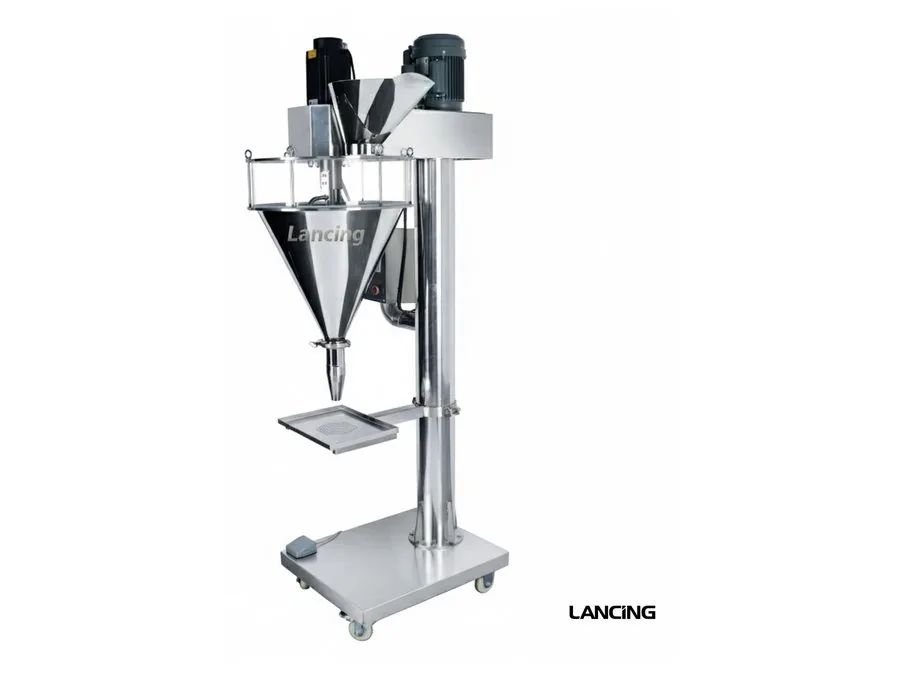
Powder-contact parts should be checked for material compatibility, cleaning access, surface condition, wear points and how the product behaves against the metal, seals or plastic components. Stainless steel is common, but the grade, finish and design still need to match the product and cleaning regime.
Abrasive, corrosive, staining, aromatic or hygiene-sensitive powders may need extra review before the machine is confirmed.
The best answer depends on the powder, equipment layout, operator workflow and acceptance criteria.
| Factor | What to check | Why it matters |
|---|---|---|
| Material compatibility | Does the powder attack or contaminate contact parts? | Prevents corrosion, wear or product-quality issues |
| Surface finish | Can the surface be cleaned to the required standard? | Important for hygiene and changeover |
| Wear areas | Screw, tube, seals and agitation points | Affects maintenance and repeatability |
| Cleaning method | Dry wipe, dismantling or wet cleaning | Changes machine design and operating procedure |
Safety data and ingredient information help assess compatibility.
Abrasive powders may change maintenance frequency.
Do not assume a machine is suitable for every regulated environment without assessment.
These answers are written to help production, engineering and procurement teams prepare a realistic enquiry.
Stainless steel is commonly used for powder-contact parts, but suitability still depends on the product, cleaning method and operating environment. Corrosive, abrasive or reactive powders need a more specific compatibility review.
Product-contact parts may include the hopper, auger screw, tube, agitator, chute, nozzle, seals and any feeding equipment. The exact contact path should be confirmed on the chosen machine.
Yes. Surface finish, corners, joints, seals and access all affect cleaning. A clean-looking machine may still be unsuitable if product traps or inaccessible areas remain.
Material evidence may be appropriate for regulated or quality-controlled projects. The requirement should be discussed before order so the documentation scope is agreed.
Include product samples, fill target, pack format, target output and any cleaning, dust-control, sealing, coding or integration requirements.