Confirm this point early so the final recommendation matches your product, pack and production target.
Line integration
Planning induction sealing after powder filling.
Good sealing depends on more than the induction unit; the filled pack must arrive clean, stable and correctly closed.
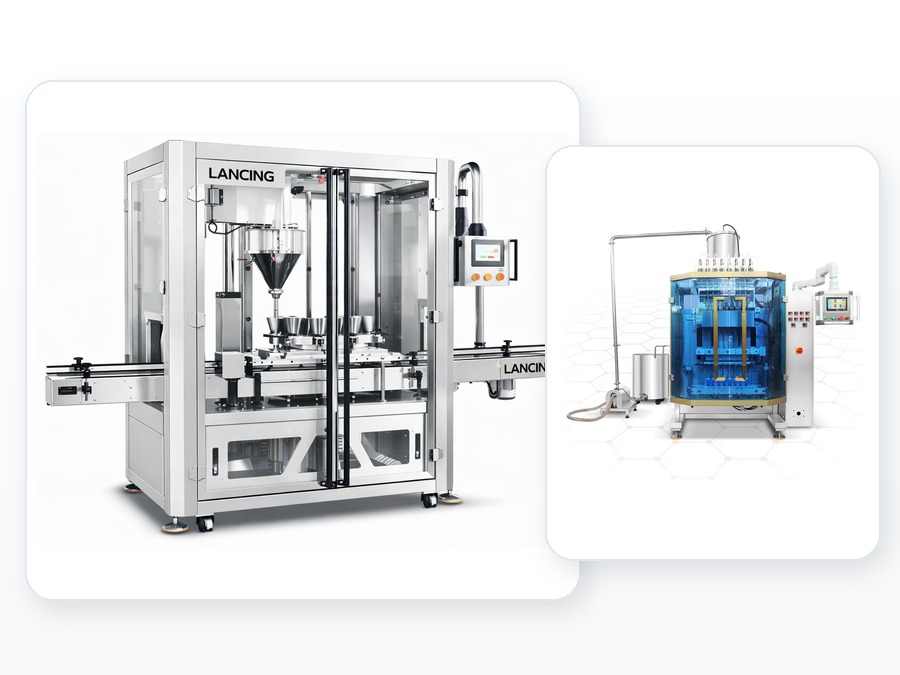
Practical guidance
Start with the product, pack and required output.
For jars and tubs, induction sealing may be used after filling and capping. Powder on the rim, trapped dust or poor cap application can affect sealing quality, so the filling and closing stages need to be aligned.
The line should allow the product to settle and the cap to be applied consistently before the container passes through the sealing head. Container diameter, cap type and line speed all influence the final specification.
Details that help narrow the specification
- Jar or tub material and closure type
- Foil liner and cap specification
- Dust control before closing
- Line speed and conveyor stability
- Inspection or rejection after sealing
Buying decisions
Points to confirm before choosing equipment.
These checks help compare semi-automatic, automatic and line-integrated options against the way the product will actually be packed.
Plan downstream handling at the same time as the filler so the finished pack is reliable.
Confirm this point early so the final recommendation matches your product, pack and production target.
Confirm this point early so the final recommendation matches your product, pack and production target.
Quick answers
Common questions from machinery buyers.
Can induction sealing follow auger filling?
Yes. It is common on rigid powder packs when the container and cap are suitable.
Why does dust matter for sealing?
Dust can sit on the sealing surface and interfere with closure quality.
Should I supply cap and liner samples?
Yes. Samples help confirm capping and sealing requirements.
Send the product and pack details.
We can help compare the auger filler, powder feed and line options that fit your production requirement.
Related powder filling topics
Advice overviewAuger filler machinesPowder filling applicationsBuyer guideEnquiry checklistRequest adviceAdding labelling and coding to a powder filling lineHow to estimate output from a powder filling machinePowder filling options for small batches and flexible productionMoving from hand filling to an auger powder filling machine