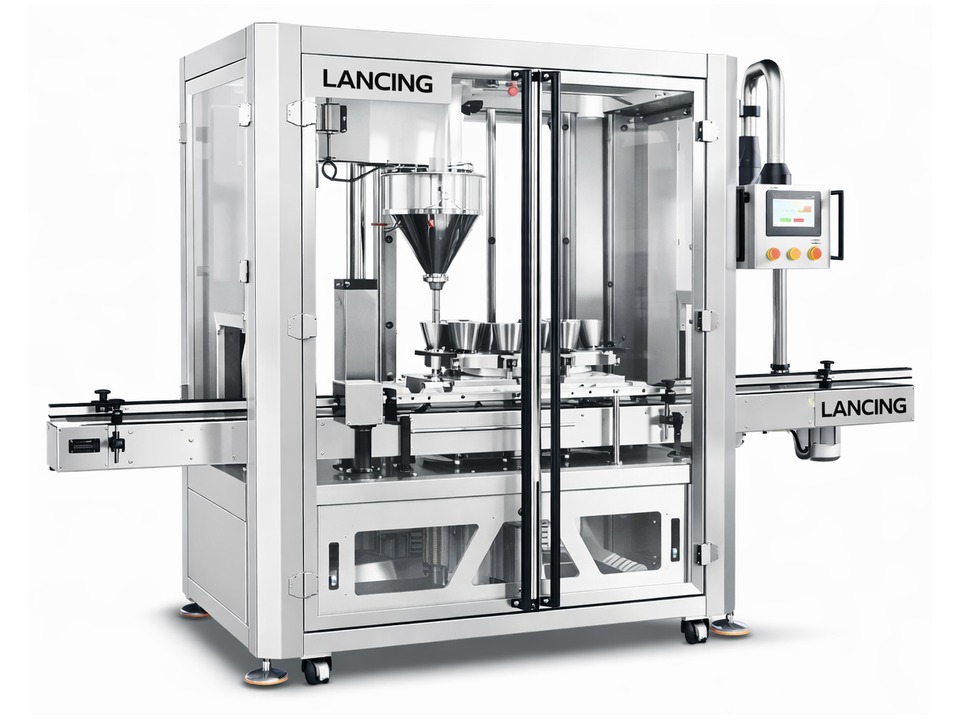
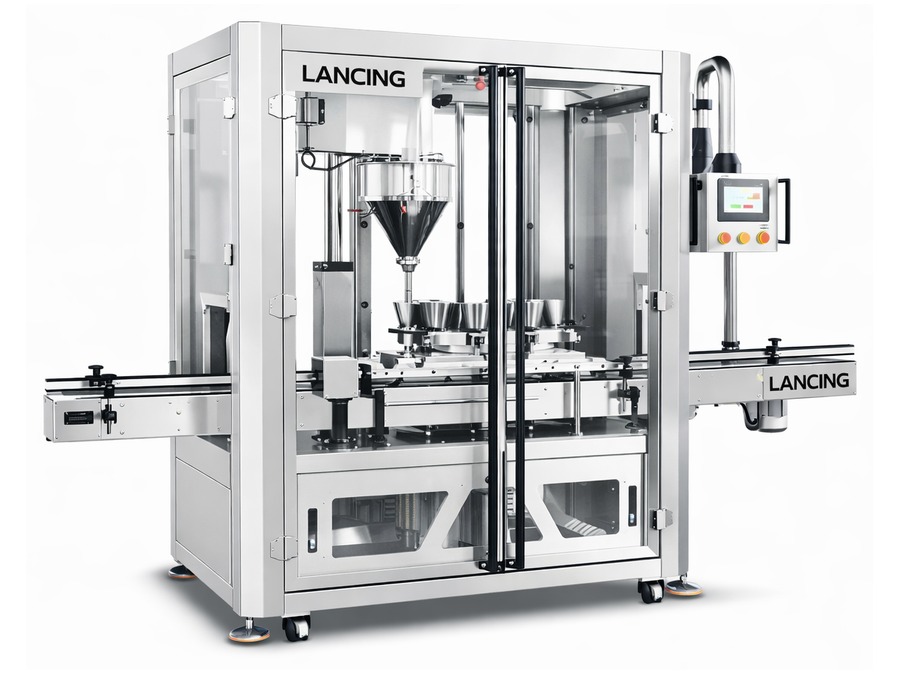
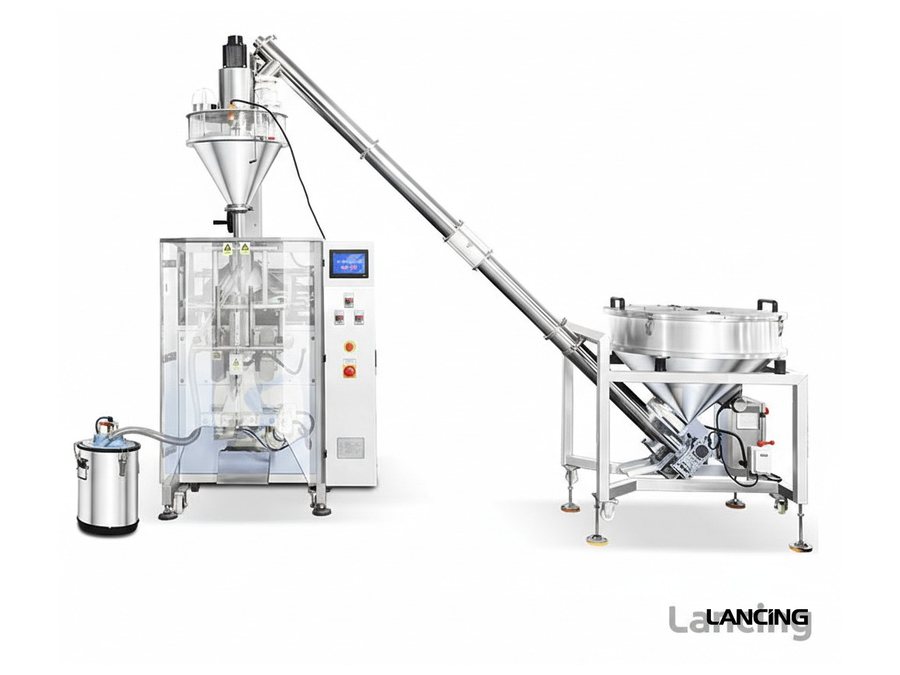
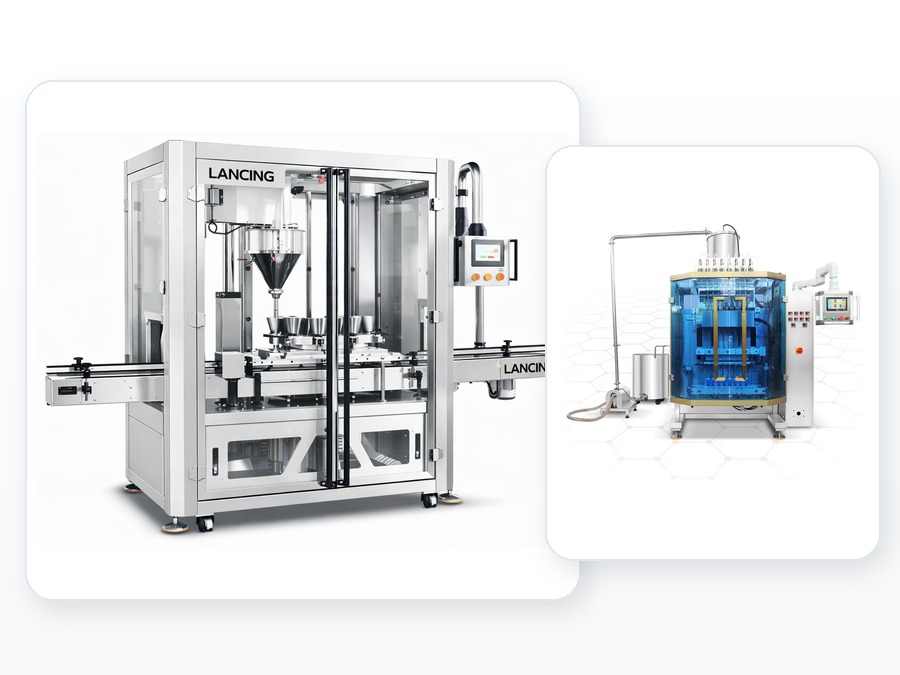
Automatic auger filling should be planned as a working line, not only as a filling head.
Container-fed auger filling projects depend on how consistently the pack is presented under the filling head and how cleanly it moves away for capping, sealing, labelling or checking. The filler specification should therefore include container handling and downstream interfaces.
Useful details to confirm
Container size range and stability on conveyor
Fill weight, density variation and checking method
Hopper loading and product feed method
Dust control and extraction expectations
Capping, sealing, labelling and coding requirements
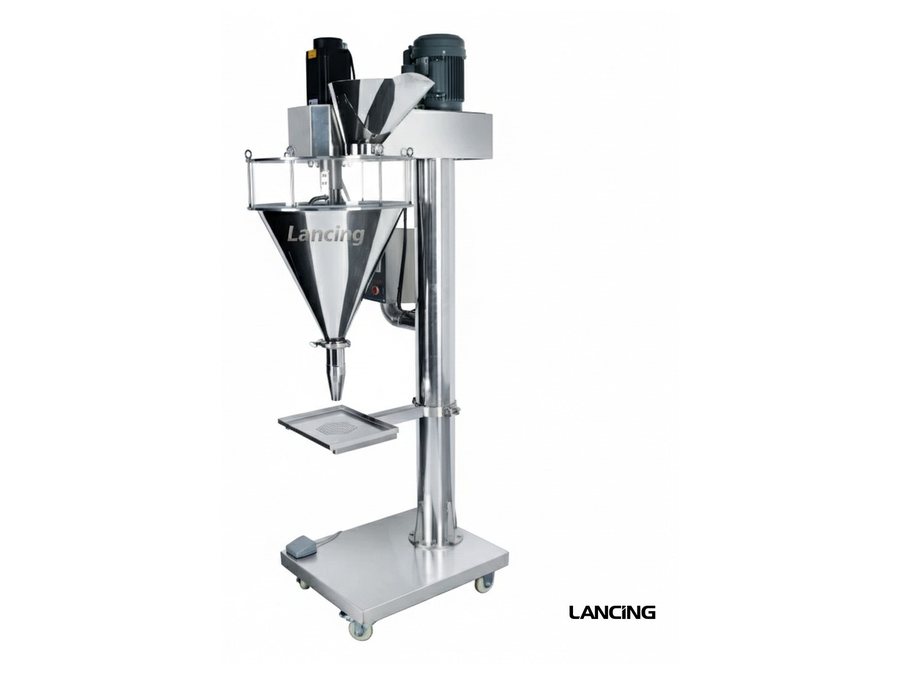
A practical option for smaller batches, trials, short runs and growing production where repeatable powder dosing is needed without a fully automated line.
When should I move from semi-automatic to automatic auger filling?
Automatic filling becomes more attractive when labour, output, repeatability or line flow is limiting production.
Can automatic auger fillers work with capping machines?
Yes. The filler can be scoped with capping, induction sealing, labelling, coding, conveyors and accumulation where required.
Does automatic filling always improve accuracy?
Not automatically. Accuracy depends on powder behaviour, tooling, product feed, target fill, density changes and any weigh-feedback or checking system.