Total cost of ownership for powder filling machines.
The purchase price is only one part of the decision. A useful cost review includes operators, tooling, waste, cleaning, maintenance, downtime and the effect of downstream bottlenecks.
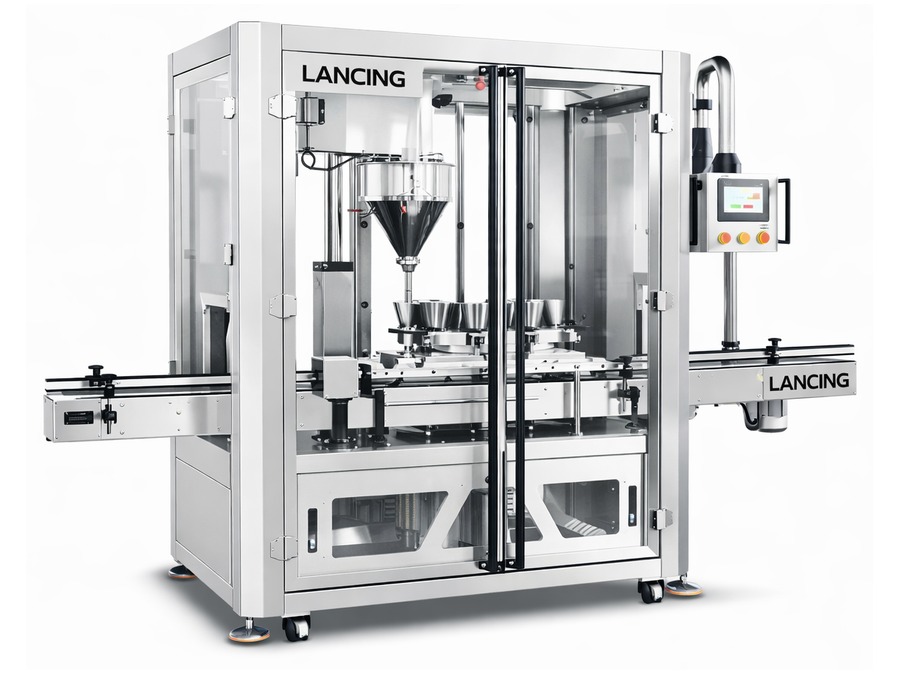
Costs beyond the filler
A filling machine can only perform as well as the full process around it. Hopper loading, container supply, capping, sealing, labelling, checking and packing can each create labour or downtime costs.
Tooling, change parts, product-contact parts and spare items should be considered where multiple products, fill weights or containers will be used.
Dust control, cleaning time, product waste and rejected packs can have a bigger cost impact than the headline machine price, especially with high-value powders.
How automation affects ownership cost
Semi-automatic equipment may have a lower initial cost and more operator involvement. Automatic equipment can reduce manual handling and increase consistency when volumes justify it.
Higher automation may also increase the need for planned maintenance, operator training, more precise pack supply and better line balancing.
The decision should be based on realistic production hours, changeover frequency and the cost of operators, not only peak theoretical output.
Building a practical business case
Estimate the cost of current filling, including labour, giveaway, rejects, rework and scheduling delays.
Compare that with the proposed filling route, including installation, training, maintenance, spares, cleaning, product trials and future integration.
A phased plan may sometimes outperform a single large purchase if it reduces risk and lets production learn the product behaviour first.
Key decisions to make before specification.
| Cost area | What to include | Why it matters |
|---|---|---|
| Labour | Filling, container loading, weighing, cleaning and packing | Determines payback against manual or outsourced filling |
| Product loss | Dust, giveaway, rejects and clean-down waste | Can be significant for supplements, ingredients and chemicals |
| Changeover | Parts, cleaning, setup checks and operator time | Controls real capacity across multiple SKUs |
| Support | Spares, maintenance, training and downtime cover | Affects availability after installation |
Information to gather before you enquire.
This checklist helps Lancing review the project quickly and avoids a machine recommendation based on incomplete product or pack information.
- Current manual or outsourced cost per pack
- Expected production hours and SKUs
- Product value and waste risk
- Cleaning and changeover frequency
- Need for capping, sealing, labelling or checkweighing
- Spares and maintenance plan
Common questions about this topic.
Is the cheapest machine usually best value?
Not if it increases waste, downtime, cleaning time or integration problems.
Should payback be based on peak speed?
No. Use realistic output after changeovers, cleaning, product refill and downstream packing are considered.
Can a phased machine plan reduce risk?
Yes, especially when products, volumes or pack formats are still being proven.
Need help specifying a powder filling machine?
Send your product, pack format, fill target and output requirement and Lancing can help compare suitable auger filler options.