Confirm this point early so the final recommendation matches your product, pack and production target.
Machine selection
Choosing auger tooling for powder filling accuracy and output.
Tooling selection links the product, target dose and fill speed; it is not simply a matter of using the largest screw available.
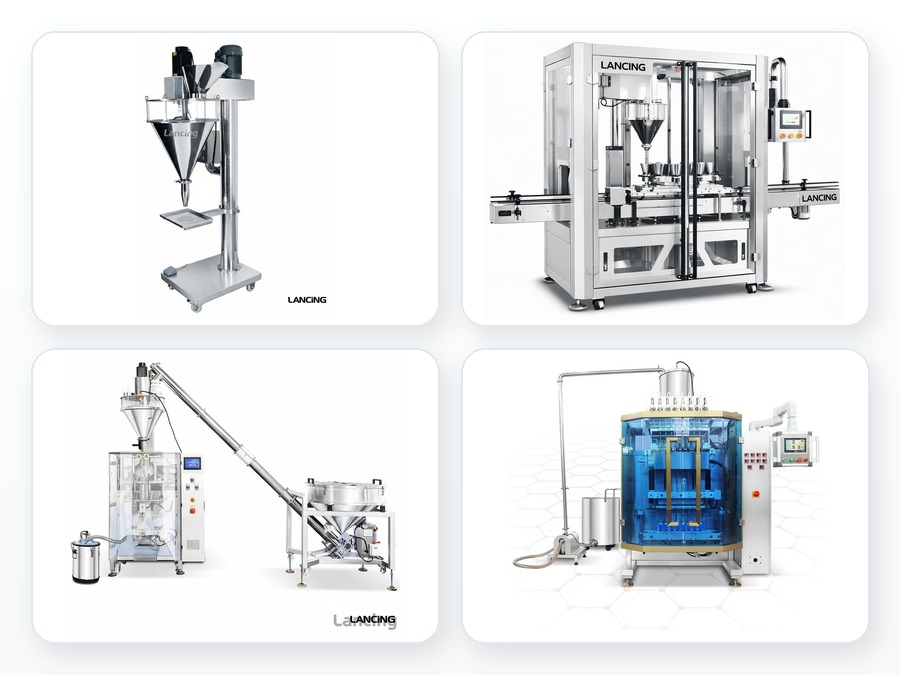
Practical guidance
Start with the product, pack and required output.
A screw that is too small may be slow for the target output. A screw that is too large may be hard to control for small fills. The filler should be matched to the fill range, bulk density and required tolerance.
Funnel and nozzle design are also important because they control how product leaves the screw and enters the pack. For dusty powders, cut-off and containment need close attention. For dense powders, the machine must cope with product loading and torque.
Details that help narrow the specification
- Smallest and largest fill weight
- Bulk density and particle size
- Required output per minute
- Dusting and product cut-off behaviour
- Number of products on the same machine
Buying decisions
Points to confirm before choosing equipment.
These checks help compare semi-automatic, automatic and line-integrated options against the way the product will actually be packed.
Confirm this point early so the final recommendation matches your product, pack and production target.
Measure output as finished packs per minute, including filling, closing and inspection.
Confirm this point early so the final recommendation matches your product, pack and production target.
Quick answers
Common questions from machinery buyers.
Can tooling be changed later?
Often yes, but the machine should be specified with the likely fill range in mind.
Is bigger tooling faster?
Sometimes, but it may not suit small fills or tight tolerances.
Should I buy spare tooling?
If you run multiple products or pack sizes, spare tooling can reduce downtime.
Send the product and pack details.
We can help compare the auger filler, powder feed and line options that fit your production requirement.
Related powder filling topics
Advice overviewAuger filler machinesPowder filling applicationsBuyer guideEnquiry checklistRequest adviceWhen powder filling needs hopper agitationChoosing how to load product into an auger filler hopperContainer indexing for jars, bottles and tubs on powder filling linesPlanning capping after powder filling