Auger filler user requirement specification for powder filling projects.
A clear URS helps turn an enquiry into a practical machine specification by setting out the powder, pack, accuracy, cleaning and integration requirements before quotation.
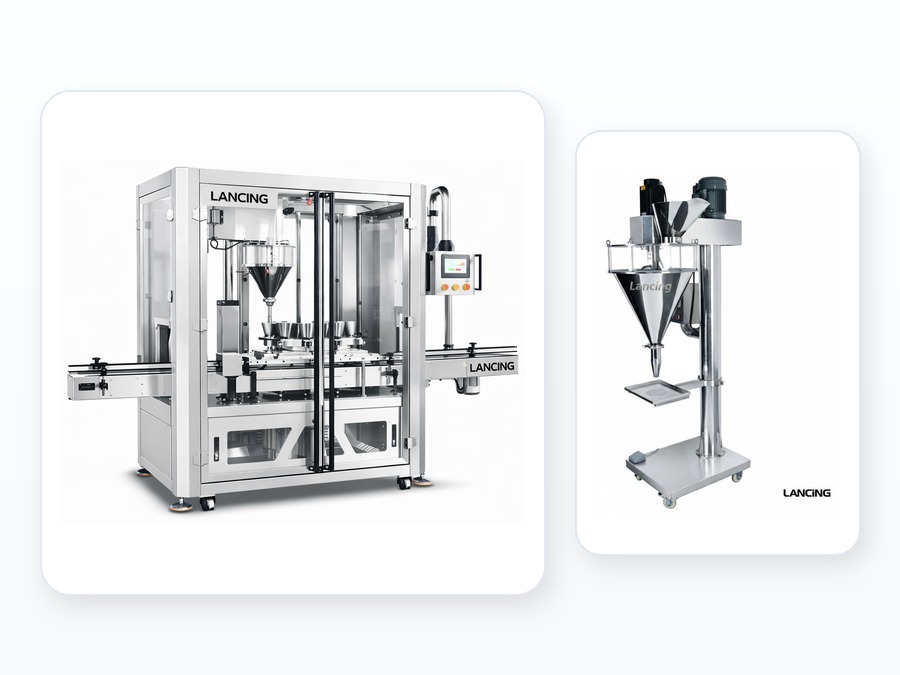
What to define before asking for a quotation
Start with the product. Bulk density, flow behaviour, dust level, hygroscopic behaviour, bridging risk and the need for agitation can all affect the auger and hopper arrangement.
Define the pack before the machine. A jar, tub, bottle, pouch, bucket or VFFS bag changes the handling method, the fill height, the amount of headspace and the downstream equipment needed.
Set out the acceptance method. Some projects are checked by sample weighing; others need checkweighing, reject handling or weigh-feedback depending on giveaway risk and quality-control requirements.
Useful URS fields
Product name, product family and whether the product is food, supplement, cosmetic, chemical or household powder.
Target fill weight or volume, acceptable tolerance, pack dimensions, closure method and label or coding requirements.
Required cleaning access, product-contact material expectations, utilities, available floor space and the intended production changeover pattern.
How Lancing can use the URS
The information helps compare semi-automatic filling, inline automatic filling, VFFS auger dosing and complete-line approaches without assuming one machine style is right for every powder.
Photos, drawings, container samples and product samples can then be reviewed against the URS so the recommendation is based on the actual project rather than a generic machine list.
Key decisions to make before specification.
| Requirement area | What to capture | Why it matters |
|---|---|---|
| Powder | Bulk density, flow, dust, aeration, bridging and cleaning sensitivity | Changes the hopper, auger, agitation and dust-control approach |
| Pack | Container type, dimensions, fill opening, headspace and closure | Controls presentation, indexing, nozzle clearance and downstream automation |
| Quality control | Tolerance, sample checks, checkweighing and rejection needs | Avoids specifying dosing alone when the process needs verification |
| Line integration | Feed system, capping, sealing, labelling, coding and accumulation | Prevents a filler being selected without considering bottlenecks |
Information to gather before you enquire.
This checklist helps Lancing review the project quickly and avoids a machine recommendation based on incomplete product or pack information.
- Product data sheet or specification
- Target fill weight and tolerance expectation
- Container or pouch drawings and samples
- Current filling method and output target
- Cleaning and changeover expectations
- Any capping, sealing, labelling, coding or checkweighing requirement
Common questions about this topic.
Is a URS only for large projects?
No. Even a short requirement list helps small and semi-automatic projects avoid mismatched filling, container handling or cleaning assumptions.
Do I need exact tolerance figures before enquiry?
A target helps, but early discussions can still compare what is practical once product samples and pack details are available.
Should the URS include future automation?
Yes, especially where the first machine may later need to connect to conveyors, capping, labelling or inspection equipment.
Need help specifying a powder filling machine?
Send your product, pack format, fill target and output requirement and Lancing can help compare suitable auger filler options.